Teeth don’t lose their colour overnight. It is a process that takes months, even years, and we often only notice it when our smile in photos is no longer as bright as it once was. That is usually the moment many people start thinking about teeth whitening – whether it’s a quick fix from the shop or a professional treatment at the dental clinic.
Today the market is flooded with products promising a white smile in just a few days. Strips, gels, toothpastes, even mobile apps that supposedly help you find “the exact shade of white”. But how effective are these methods really? And what happens when you leave whitening to a professional?
In this article we take a detailed look at at-home whitening versus professional whitening – focusing on safety, effectiveness, how long the results last and a personalised approach.
Why do teeth lose their colour?
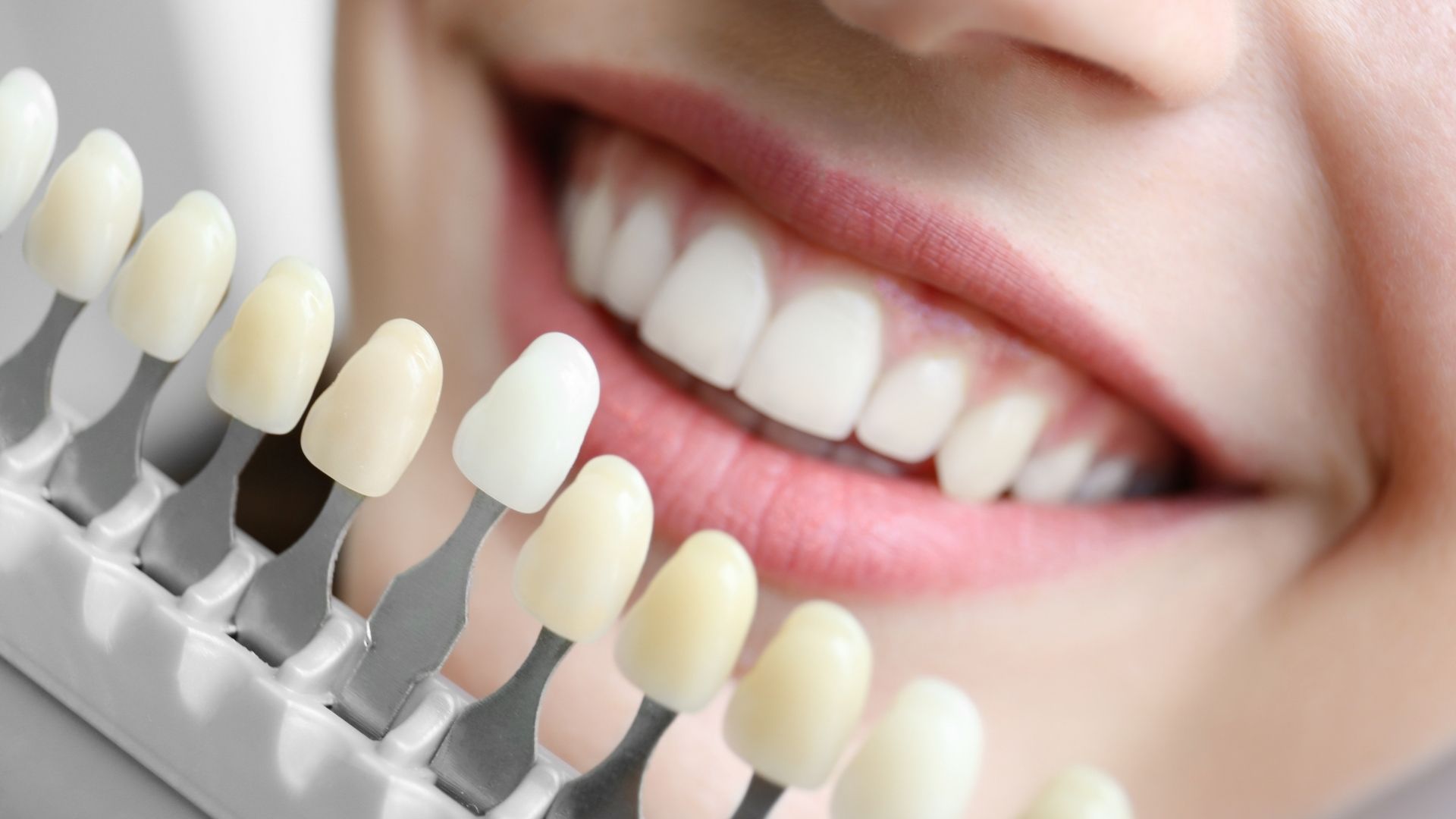
Tooth discolouration is not always a sign of poor hygiene. It is often the result of everyday habits: drinking coffee, tea and red wine, smoking and eating dark-coloured foods. On top of that, tooth enamel naturally thins with age, revealing the darker dentine underneath.
Teeth can also darken because of medication, trauma or old amalgam fillings. Some causes can be whitened and some cannot – all the more reason to have a professional assessment before any procedure.
At-home teeth whitening – what does it involve?
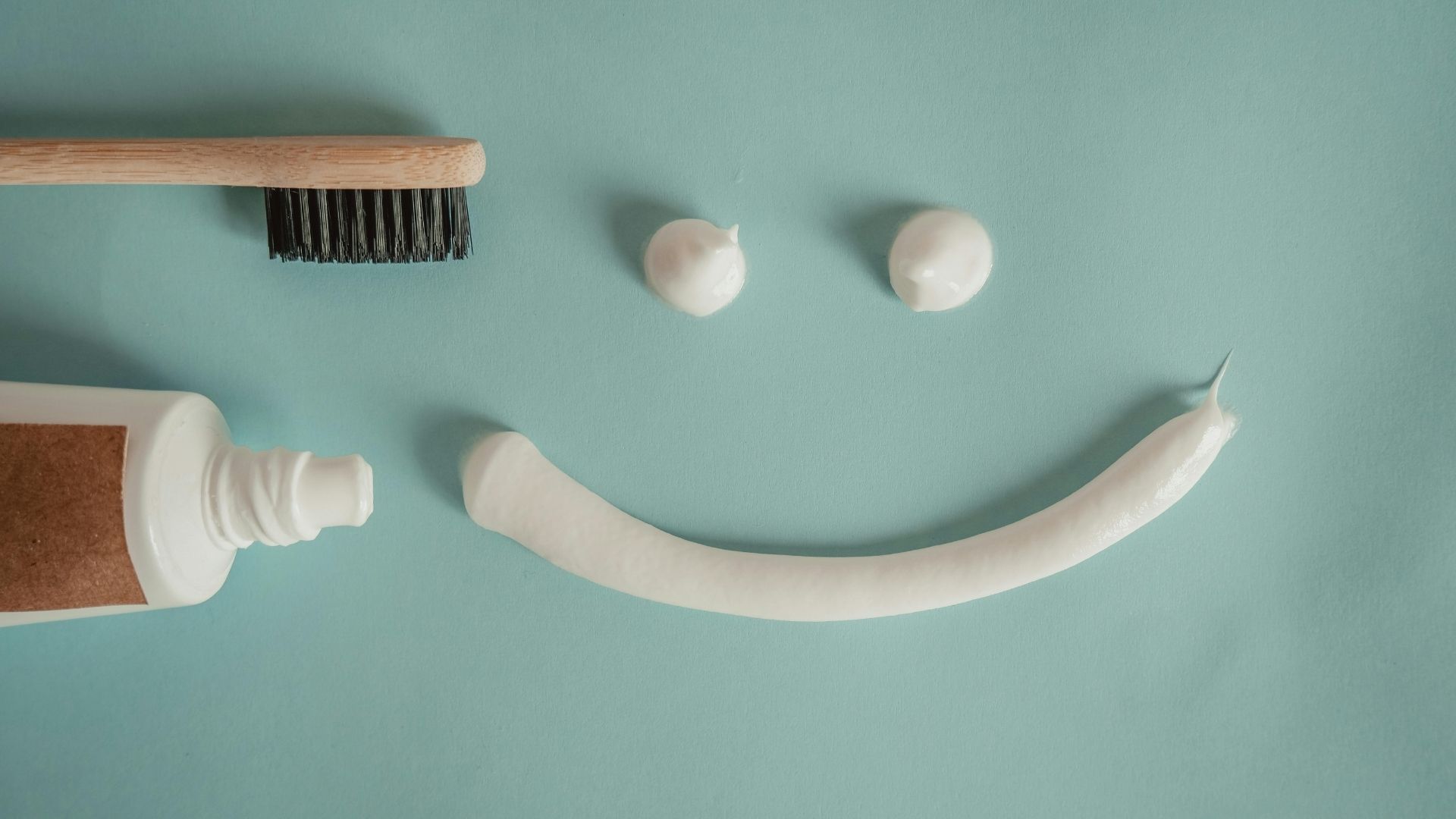
There is a wide range of products on the market that you can use yourself:
- Whitening strips
- Brush-on gels
- Whitening toothpastes
- Kits with an LED light
- Natural methods (e.g. bicarbonate of soda or activated charcoal)
At first glance, all of this seems simple and affordable. However, the low price and easy availability often hide certain limitations.
➤ Advantages of at-home whitening
- Easy to get hold of and inexpensive
- Can be done in your own time
- A sense of control over the process
➤ Disadvantages of at-home whitening
- Low concentration of active ingredients – results are often weak or non-existent
- Uneven application – strips and gels don’t sit perfectly on every tooth
- Risk of gum irritation and sensitivity
- No control over the causes of discolouration – you may only “whiten” the surface while deeper problems remain
In addition, incorrect use can cause enamel damage, especially with products based on abrasive ingredients. Natural methods such as lemon, bicarbonate of soda or charcoal may have a temporary effect, but in the long run they damage the tooth surface.
Professional whitening – what to expect?
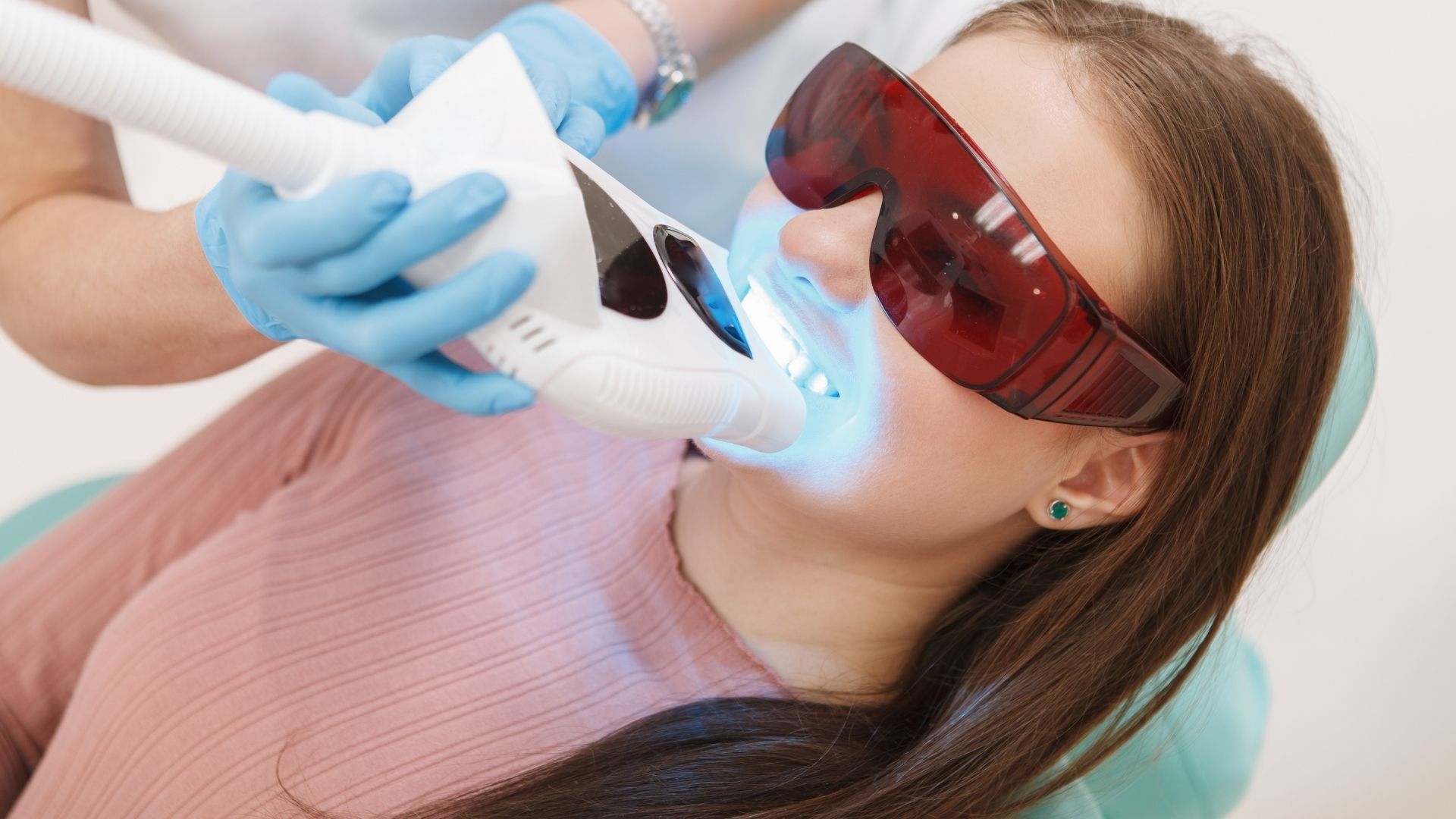
At Dentico Dental Clinic, whitening is not just a cosmetic procedure. It is a carefully planned treatment that starts with a thorough examination – to determine whether the patient is a suitable candidate for whitening and which method would be most effective.
There are two main methods:
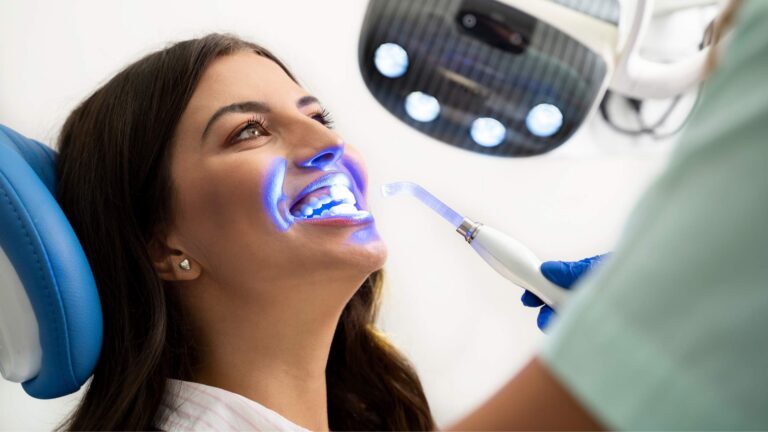
- In-surgery whitening (with a lamp or laser) – carried out in one or more sessions under the supervision of a dentist.
- Custom-made trays with gel for home use – made from an impression of your teeth and used at home following your dentist’s instructions.
➤ Advantages of professional whitening
- Fast, visible results – after just one visit
- Safety and control – the dentist adjusts the gel concentration and treatment time
- Precision – whitening is applied evenly, without damaging the soft tissues
- Long-lasting effect – with proper care, results can last for years
➤ Possible side effects
The most common side effect is temporary tooth sensitivity, which disappears after a few days. Gum irritation can occur in rare cases, but this is almost always prevented with the right approach and protection during treatment.
How long the results last: it’s up to you
Bright white teeth don’t last forever – no matter how you whitened them. Coffee, wine, smoking and poor oral hygiene can undo whitening results within a few months. But with proper care and regular check-ups, the results of professional whitening can last more than two years.
At-home whitening rarely produces such a long-lasting effect – it usually needs to be repeated constantly, which further increases the risk to your enamel.
Is teeth whitening for everyone?
No – and that is important to understand.
Some teeth simply don’t respond to whitening – for example, teeth with dark internal discolouration, teeth with large fillings, and porcelain crowns and bridges. In such cases, whitening won’t deliver the expected result. That’s why the first step is a consultation with a dentist.
Whitening treatments are also not recommended for pregnant or breastfeeding women or for people with severe tooth sensitivity.
Conclusion: which should you choose?
If you are looking for speed, safety and long-term results, professional whitening is the best choice. With at-home methods, results are often limited and the risks are greater, especially when products are used incorrectly and without supervision.
At Dentico, we don’t believe in one-size-fits-all solutions. Every smile is different, so the approach to whitening must be personalised too. Our team will guide you through the entire process – from the examination and assessment to the treatment itself and advice on keeping your smile white.
A smile is the first impression we make. Let it be bright – and healthy.