Dental crowns are one of the most common solutions in modern dentistry for restoring teeth that are damaged or that you are unhappy with aesthetically. Whether your tooth has been weakened by tooth decay, a fracture or root canal treatment, a dental crown can restore both its function and its natural appearance. However, before you decide to have a crown fitted, it is important to understand the whole procedure, as well as the benefits and potential drawbacks that come with it.
In this article, we explore what dental crowns are, when they are needed, how they are fitted and which types of crown are available. Our aim is to help you make an informed decision and feel confident that you have chosen the best solution for your dental health.

What are dental crowns and when are they needed?
A dental crown is a type of prosthetic restoration that is placed over a damaged tooth, covering it completely. The crown restores the tooth’s shape, size, strength and appearance, giving it back its full function and a natural look. Crowns are often used when a tooth is no longer strong enough to withstand normal chewing forces, whether because of tooth decay, a fracture, a large filling or following root canal treatment.
Crowns are also ideal for:
• Protecting a weakened tooth (for example, one affected by decay or a crack) from further damage.
• Restoring a tooth that is already damaged or badly worn.
• Covering and supporting a tooth with a large filling when there is not enough natural tooth left to hold a filling.
• Covering a tooth after endodontic treatment (root canal treatment) to ensure long-term stability.
• Improving the appearance of a tooth – for cosmetic purposes, if the tooth is discoloured or irregularly shaped.
How are dental crowns fitted?
Fitting a dental crown is usually carried out in several stages, which include preparing the tooth, taking impressions, placing a temporary crown and, finally, fitting the permanent crown.
1. Preparing the tooth
The first step in fitting a crown is preparing the tooth. Your dentist will remove any damaged parts of the tooth and shape what remains so that it can receive the crown. This involves reshaping (grinding down) the tooth to create enough space for the crown. If the tooth is badly damaged, the dentist may build up its core with filling material to give the crown additional support.
2. Taking impressions
Once the tooth has been prepared, your dentist will take an impression of it and the surrounding teeth. These impressions are used to make a custom crown that will fit your tooth perfectly. While the permanent crown is being made in the dental laboratory, your dentist will fit a temporary crown to protect the prepared tooth.
3. Fitting the permanent crown
When the permanent crown is ready, your dentist will remove the temporary crown and place the permanent one on the tooth. Before final cementation, the dentist will check the crown’s fit, colour and shape and make any necessary adjustments to ensure a perfect fit. Once both you and your dentist are happy with the result, the crown will be permanently cemented onto the tooth.
Types of dental crowns
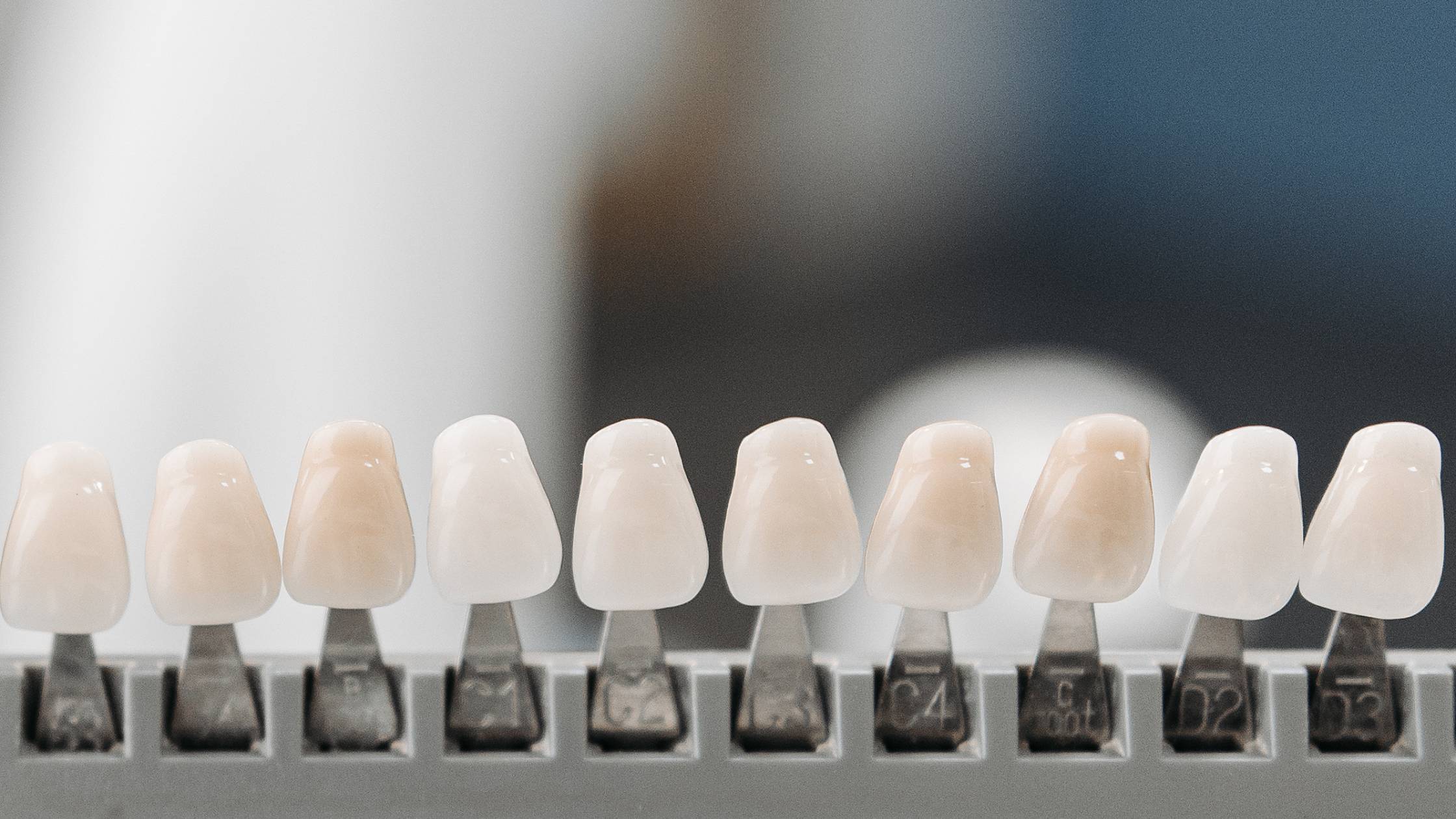
There are several types of dental crown, which differ in the materials they are made from. Your dentist will help you choose the most suitable type based on your needs, aesthetic wishes and budget.
1. Metal crowns
Metal crowns are extremely durable and can withstand strong chewing and biting forces. They are usually made from alloys containing gold, platinum or base metals such as nickel or chromium. Although metal crowns are very long-lasting, their main drawback is their appearance: they are visible, so they are usually used for back teeth.
2. Ceramic or porcelain crowns
Ceramic or porcelain crowns are popular because of their natural colour and aesthetics, which makes them ideal for front teeth. Although they are not quite as durable as metal crowns, they look very natural and are an excellent choice for anyone who wants a discreet solution.
3. Porcelain-fused-to-metal crowns
Porcelain-fused-to-metal crowns combine the durability of metal crowns with the aesthetics of ceramic ones. The metal framework provides strength, while the outer layer is covered with ceramic that matches the colour of your natural teeth. These crowns are a popular choice because they offer a good balance of durability and aesthetics.
4. Zirconia crowns
Zirconia crowns are made from zirconia, a highly durable material that can be matched to the natural colour of your teeth. These crowns combine strength and aesthetics, making them an excellent choice for both front and back teeth.
What should you know before getting a dental crown?
Before you decide to have a dental crown fitted, it is important to consider several factors:
• Longevity and maintenance: Dental crowns can last 10–15 years, or even longer, with proper care and regular dental check-ups. You need to maintain good oral hygiene, including regular brushing, flossing and avoiding hard foods that could damage the crown.
• Costs: The cost of a crown varies depending on the type of material and the complexity of the procedure. It is important to find out about prices and payment options in advance so that you can make an informed decision.
• Possible complications: Although dental crowns are a very successful solution, complications such as tooth sensitivity, discomfort or, rarely, infection can occur. It is important to talk to your dentist about all the possible risks.
Conclusion
Dental crowns are an excellent solution for restoring damaged teeth and bringing back the function and beauty of your smile. Before having a crown fitted, it is important to be well informed about the procedure, the types of crown available and their long-term care and maintenance. Talk to your dentist to choose the best option for your needs and to ensure a healthy, beautiful smile for years to come.