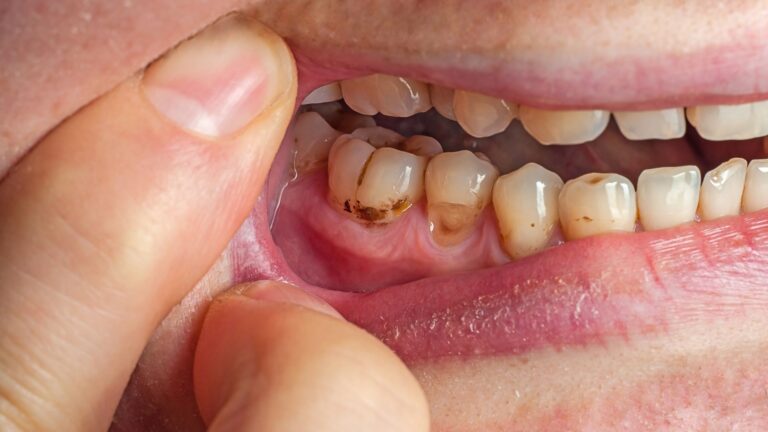
Dental cysts often cause no pain at first. That is exactly why patients sometimes discover them purely by chance, during a routine dental check-up or after an X-ray. Although the word “cyst” may sound worrying, it is important to know that dental cysts can be successfully diagnosed and treated, especially when they are caught early.
Problems arise when a cyst goes unnoticed for a long time or when treatment is put off. It can then grow, press on the surrounding tissue, damage the bone, affect neighbouring teeth or cause inflammation. That is why timely diagnosis is so important, even when the patient has no obvious symptoms.
Below we explain what dental cysts are, how they form, when they need to be removed and what recovery after the procedure usually looks like.
What is a dental cyst?
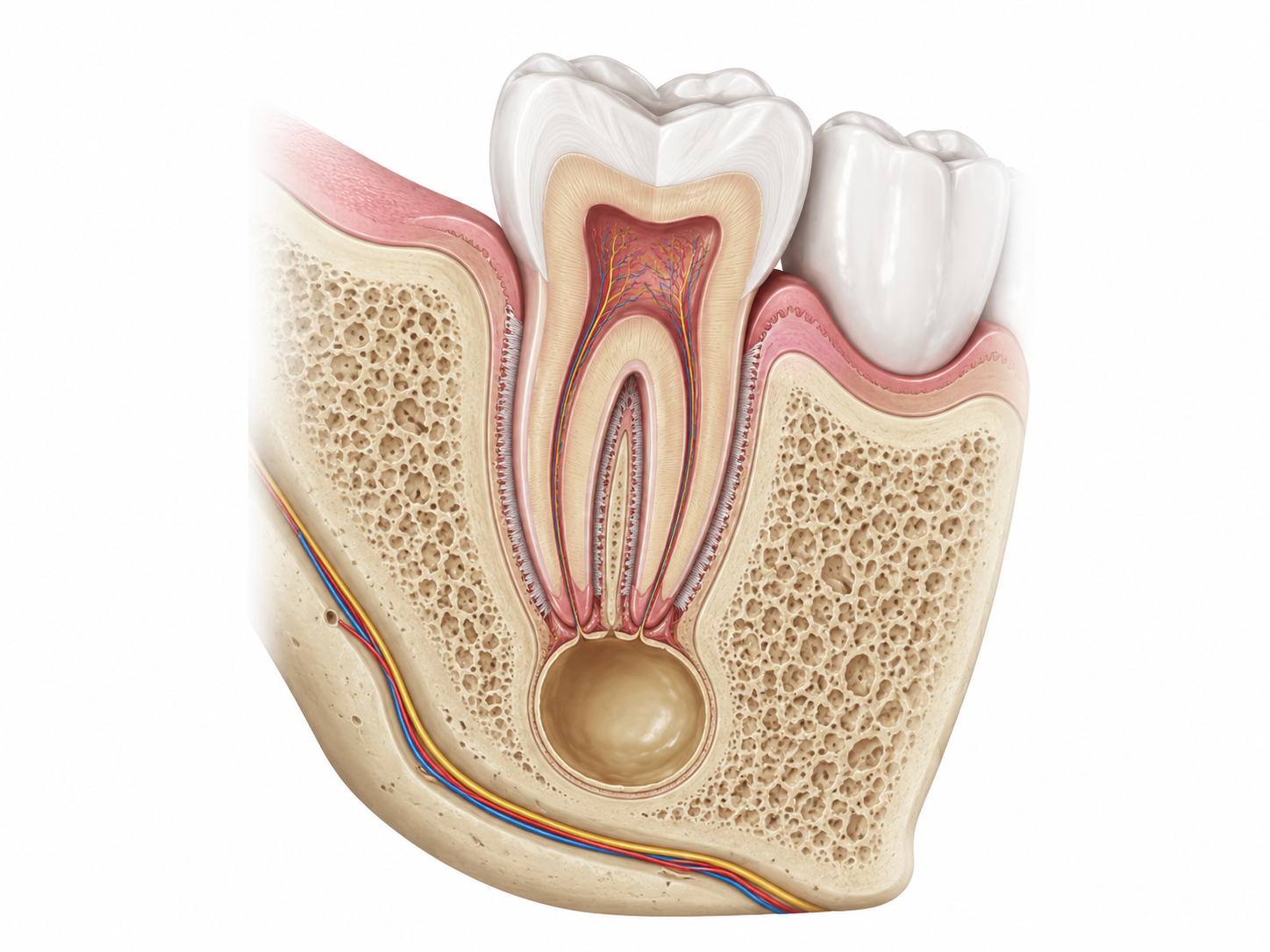
A dental cyst is an abnormal cavity filled with fluid, semi-fluid material or soft tissue, which can develop around a tooth, the root of a tooth, the jawbone or an unerupted tooth. In most cases it is a benign lesion, but that does not mean it should be ignored.
A cyst can develop slowly and remain symptom-free for a long time. At first it is small and the patient usually feels no change at all. As it grows, it can start to put pressure on the surrounding bone and teeth. In some cases it leads to pain, swelling, inflammation or discomfort when chewing.
It is important to distinguish a cyst from ordinary inflammation or temporary discomfort. A cyst is a change that requires professional diagnosis. Based on the examination, an X-ray and, where necessary, further tests, the dentist assesses what kind of change it is and the best way to treat it.
How do dental cysts form?
Dental cysts can form for a number of reasons. One common cause is chronic inflammation around the tip of a tooth’s root. When tooth decay penetrates deep into the tooth and reaches the dental pulp, an infection can develop and spread towards the root. If this inflammation is not treated in time, the body may form an enclosed cavity – a cyst – around the inflamed area.
Cysts can also develop around unerupted or partially erupted teeth, particularly wisdom teeth. When a tooth does not have enough room to grow properly, a cystic change can form around its crown. Such cysts are often discovered on X-rays, especially in patients who come in because of problems with their wisdom teeth.
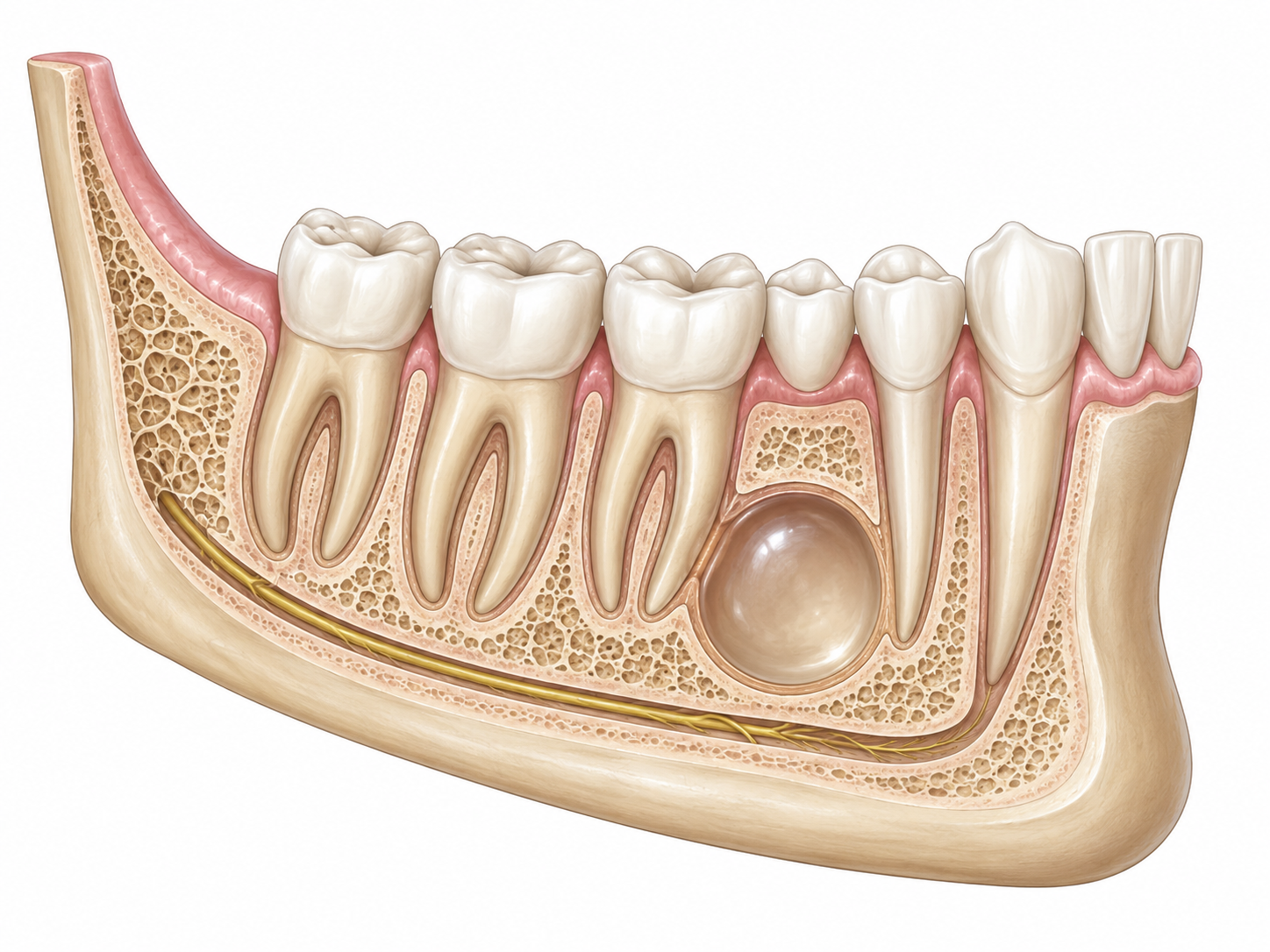
Sometimes cysts also form as a result of previous trauma, untreated infections or developmental tissue disorders. Whatever the cause, it is important not to try to “keep an eye on” a cyst without a professional assessment. Some smaller changes can be monitored, but others need treatment to prevent complications.
What are the most common symptoms?
One of the reasons dental cysts can be insidious is that they often cause no pain at first. A patient can have a cyst while eating and speaking normally and noticing no change at all. Only when the cyst grows or becomes infected do the symptoms become more noticeable.
Symptoms may include pain or pressure around the tooth, sensitivity when biting, swollen gums, an unpleasant feeling in the jaw, or discolouration of the tooth if it is linked to a dead nerve. In some cases the patient notices a lump, a fistula or occasional discharge from the gum.
If the cyst is located in the jawbone, symptoms can be very mild until it has spread significantly. Facial swelling, shifting of neighbouring teeth, a feeling of tightness or pain spreading to other parts of the jaw may then appear. If there is inflammation, stronger pain, redness, an unpleasant smell or a raised temperature may occur.
Can a cyst on a tooth exist without pain?
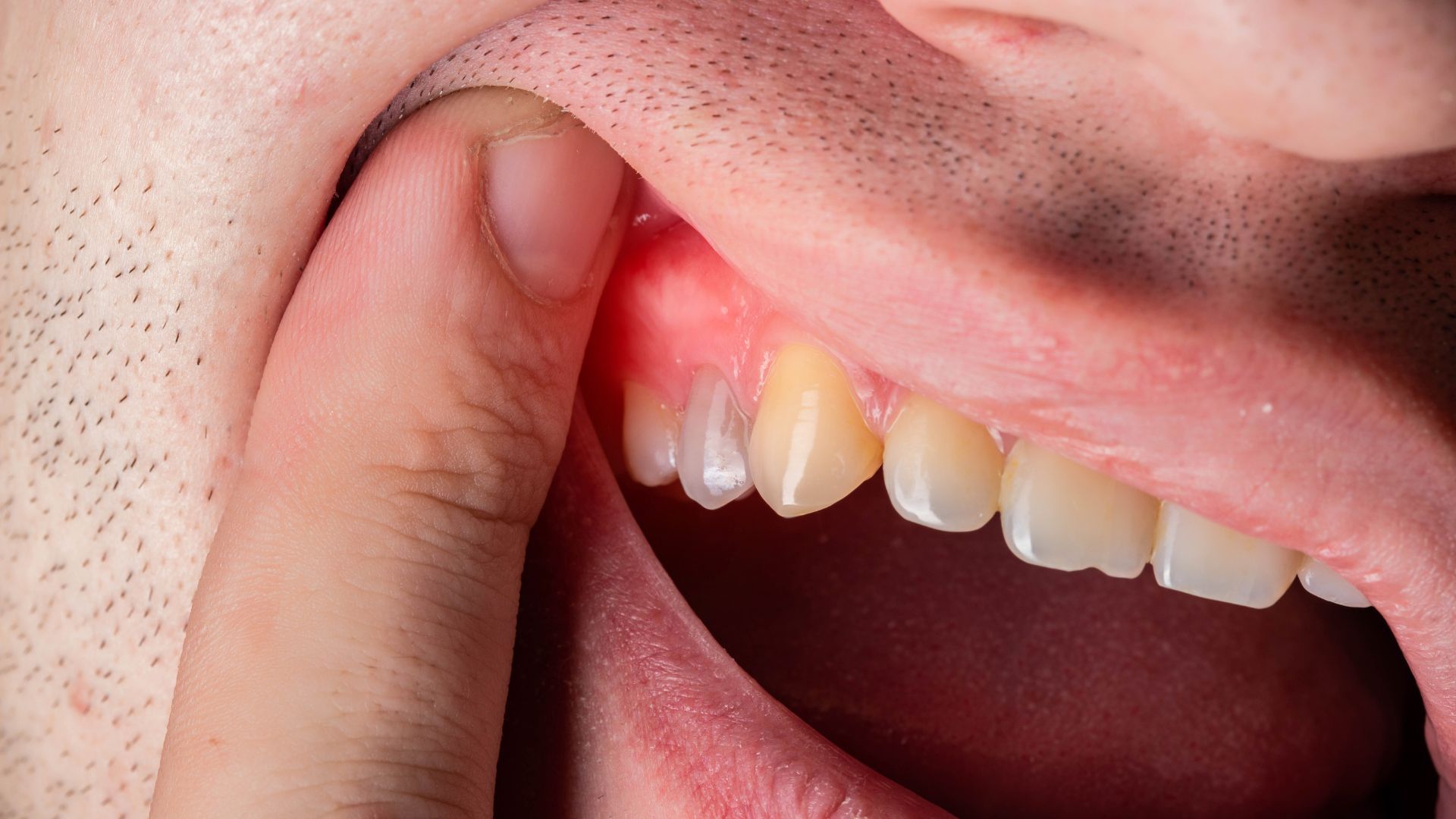
Yes, a dental cyst can exist without any pain. This is one of the most important reasons why regular dental check-ups and X-rays matter. Patients often expect a more serious dental problem always to be painful, but that is not necessarily true.
Chronic inflammation and cystic changes can remain silent for a long time. The body in a sense walls them off, so pain does not have to appear straight away. However, the absence of pain does not mean the change is not there or that it cannot progress. A cyst can spread gradually, damaging the surrounding bone as it does so.
That is why a dentist does not draw conclusions on the basis of symptoms alone. If a cyst is suspected, an X-ray or a CBCT scan can give a much clearer picture of the condition of the jaw and the tooth roots.
How is a dental cyst diagnosed?
Diagnosis usually begins with a clinical examination. The dentist checks the condition of the teeth, gums, oral mucosa and bite, and talks to the patient about their symptoms. If there is pain, swelling, a change in the gums or a suspicious finding, radiological diagnostics follow.
An X-ray often shows a change in the bone, for example a darker area around the root of a tooth or around an unerupted tooth. In some cases a panoramic X-ray is enough, while in more complex cases a CBCT, or three-dimensional scan, is recommended. This gives a more precise picture of the size and position of the cyst and its relationship to neighbouring structures.
Based on the findings, the dentist or oral surgeon assesses whether endodontic treatment, surgical removal of the cyst, tooth extraction or a combination of procedures is needed. In some cases the removed tissue is sent for histopathological analysis to confirm the nature of the lesion.
When does a dental cyst need to be removed?

The decision to remove a cyst depends on its type, size, position, symptoms and effect on the surrounding structures. If the cyst is small and linked to an inflamed tooth, the first step is sometimes to treat the cause, for example with root canal treatment. If the lesion does not resolve or is already larger, surgery may be needed.
Cysts are most often removed when they are growing, causing symptoms, damaging bone, threatening neighbouring teeth or when there is a risk of infection. If the cyst is associated with a wisdom tooth or an unerupted tooth, treatment may involve removing the tooth together with the cyst.
It is important not to wait for the pain to get worse. The earlier a cyst is detected, the simpler the treatment often is and the easier the recovery. Delaying can lead to a bigger procedure, more bone damage and more complex treatment.
What does removing a dental cyst involve?
Removing a dental cyst is usually done under local anaesthetic. This means the treatment area is numbed and the patient should not feel any pain during the procedure. Depending on the position and size of the cyst, the oral surgeon reaches the lesion through the gum, removes the contents of the cyst and cleans the affected area.
If the cyst is connected to the root of a tooth, an apicectomy is sometimes performed – removing the tip of the tooth’s root together with the inflamed tissue. If the tooth is too badly damaged to be saved, it may need to be extracted. When the cyst is associated with a wisdom tooth, the procedure is often combined with removing that tooth.
Once the cyst has been removed, the area is stitched and the patient is given recovery instructions. In some cases painkillers are prescribed and, if the dentist or surgeon considers it necessary, an antibiotic. A follow-up appointment is arranged to monitor healing and remove the stitches if they are not dissolvable.
Is the procedure painful?
The procedure itself is carried out under anaesthetic, so the patient should not feel any pain while the cyst is being removed. You may feel pressure, touch or vibration, but not sharp pain. Once the anaesthetic wears off, some discomfort, sensitivity or swelling is possible, which is normal after oral surgery.
Pain can usually be controlled with medication recommended by your dentist. It is important to follow the instructions and not to take medication on your own initiative, especially if you are already on other treatment or have health restrictions.
The fear of the procedure is often greater than the experience itself. When patients know what to expect and receive clear instructions, the procedure is much easier to go through. That is why talking to your dentist is an important part of preparing.
What is recovery like after cyst removal?
Recovery depends on the size of the cyst, the extent of the procedure, its position in the jaw and the patient’s general condition. In the first few days there may be swelling, sensitivity and mild pain. This is to be expected and usually eases gradually.
Patients are usually advised to eat softer food, avoid hot drinks and food, avoid vigorous rinsing for the first few hours after the procedure and keep up careful oral hygiene. Smoking and alcohol can slow healing, so it is best to avoid them during recovery.
It is very important not to touch the wound with your tongue or fingers, not to skip recommended check-ups, and to contact your dentist if the pain gets worse, the swelling does not go down, or you develop a temperature or an unpleasant discharge. Such symptoms do not necessarily mean a complication, but they do need to be checked.
After smaller procedures, patients often return to their daily activities relatively quickly, while larger procedures may require a somewhat longer recovery. Your dentist will give you individual instructions based on your specific case.
What can happen if a cyst is left untreated?

An untreated cyst can gradually grow and damage the surrounding bone. It can affect neighbouring teeth, causing them to shift, become loose or suffer root damage. If it becomes infected, it can lead to pain, swelling and spreading inflammation.
With larger cysts there is a risk of weakening the jawbone. Although this does not happen with every cyst, larger lesions can make the bone more vulnerable and complicate later treatment. Also, the larger the cyst, the more complex the procedure to remove it can be.
That is why the worst thing you can do is ignore the finding. Even if the cyst does not hurt at the moment, you need a professional opinion and a plan. Sometimes the dentist will recommend monitoring, but such a decision must be supervised and based on the findings.
The importance of regular dental check-ups
Dental cysts are a good example of why you should not wait until you are in pain to have a dental check-up. Many problems in the mouth develop gradually and silently. When they are detected early, treatment is often simpler, more predictable and less demanding for the patient.
Regular check-ups, X-rays when needed and timely treatment of tooth decay or root inflammation can significantly reduce the risk of complications. And if a cyst does develop, early diagnosis allows the situation to be kept under better control.
Dental cysts are no reason to panic, but they should not be ignored either. They often develop silently, without obvious symptoms, and a patient may only discover them on an X-ray. Although many cysts are benign, they can grow, damage the bone, put teeth at risk and cause inflammation if left untreated.
The most important thing is to act in time. If you have pain, swelling, discomfort or a change in your gums, or if a cyst has shown up on an X-ray, do not put off your check-up. At Dentico you can get a clear diagnosis, an expert explanation of your findings and a treatment plan tailored to your case.
A timely check-up often makes the difference between a simpler procedure and more complex treatment. That is why the best step is always the same – come in for a check-up, find out what is going on and make your decision with expert guidance.