Losing a tooth can significantly affect your appearance as well as how your mouth works, including your ability to chew and speak. When faced with this problem, it is important to choose the best solution to restore both the function and the look of your smile. The two most common options for replacing missing teeth are dental implants and dental bridges. Although both have their advantages, it is essential to understand how they differ so that you can make the best decision for your oral health.
Dental implants and bridges differ in how they are placed, how long they last, what they cost and the long-term care they need. Implants offer a long-term solution that is considered the closest thing to a natural tooth, while bridges are a more traditional option that can be less invasive but require special care and attention. In this article, we explore the pros and cons of both options in detail to help you choose the one that best suits your needs and expectations.

Dental implants
Advantages:
1. Natural look and function:
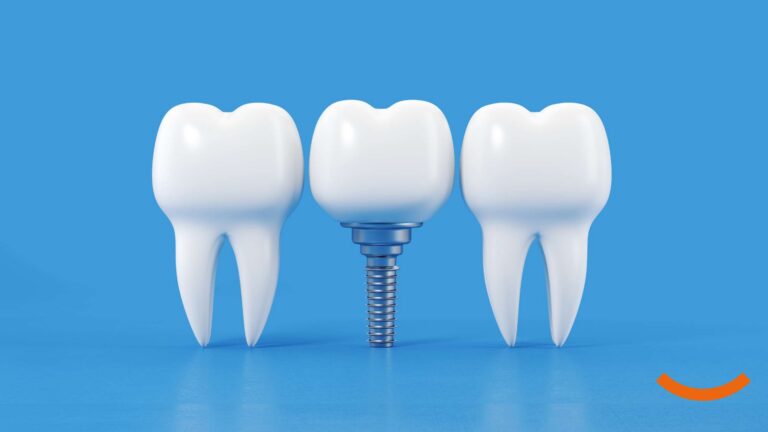
Dental implants are designed to mimic the look and function of a natural tooth. The implant is surgically placed in the jawbone, where it gradually fuses with the bone, providing a stable, permanent base for the replacement tooth (crown). The result is a tooth that is stable and firm and looks like a natural tooth, allowing you to chew and speak normally.
2. Preserving the jawbone:
When you lose a tooth, the jawbone in that area can begin to deteriorate because it no longer receives the stimulation provided by the tooth root. Implants act as a replacement for the tooth root, which prevents bone resorption and helps maintain the structure of the face.
3. Longevity:
With proper care, dental implants can last a lifetime. They cannot develop tooth decay and do not need replacing, unlike bridges, which usually have to be replaced after around ten years.
4. No impact on neighbouring teeth:
Unlike bridges, which require the neighbouring teeth to be filed down before they can be fitted, implants do not affect healthy teeth. This means your natural teeth do not need any additional preparation, so their structure and health are preserved.
Disadvantages:
1. Higher cost:
One of the main drawbacks of dental implants is their price. Placing an implant involves a surgical procedure and several visits to the dentist, which can significantly increase the overall cost.
2. Longer healing process:
Implant treatment can take several months, because the implant needs time to fuse with the bone (a process called osseointegration). During this time, you may need to wear a temporary denture or bridge.
3. Possible complications:
As with any surgical procedure, there is a risk of complications such as infection, nerve damage or the implant failing to integrate with the bone. Although these risks are relatively low, it is important to take them into account.
Dental bridges
Advantages:
1. Less invasive:
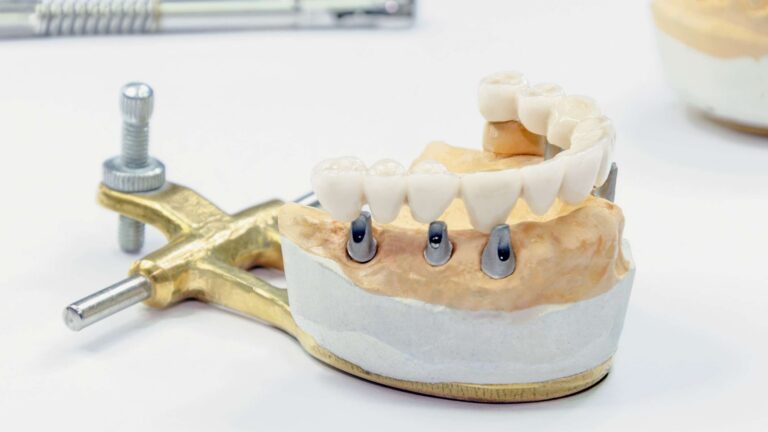
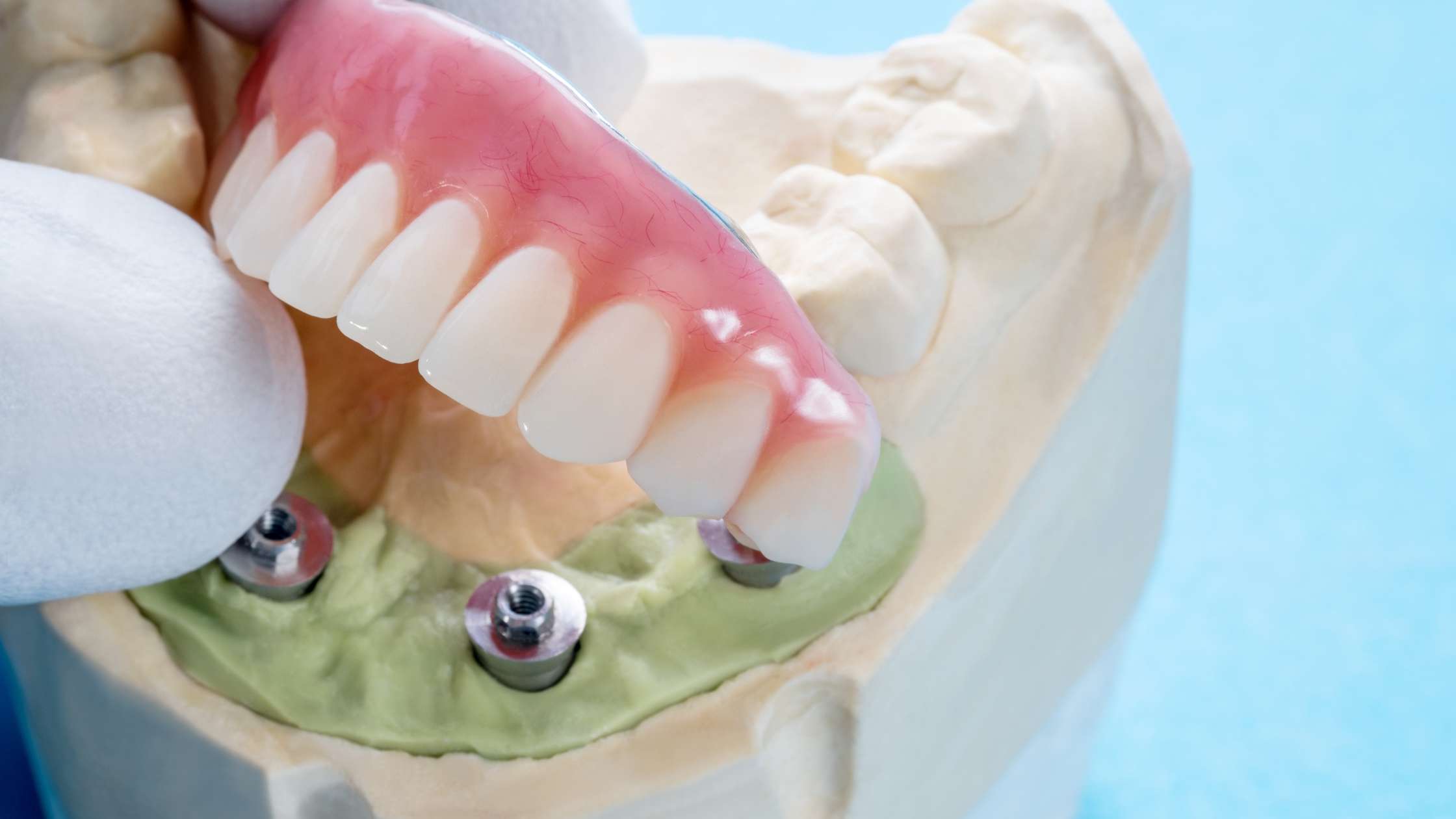
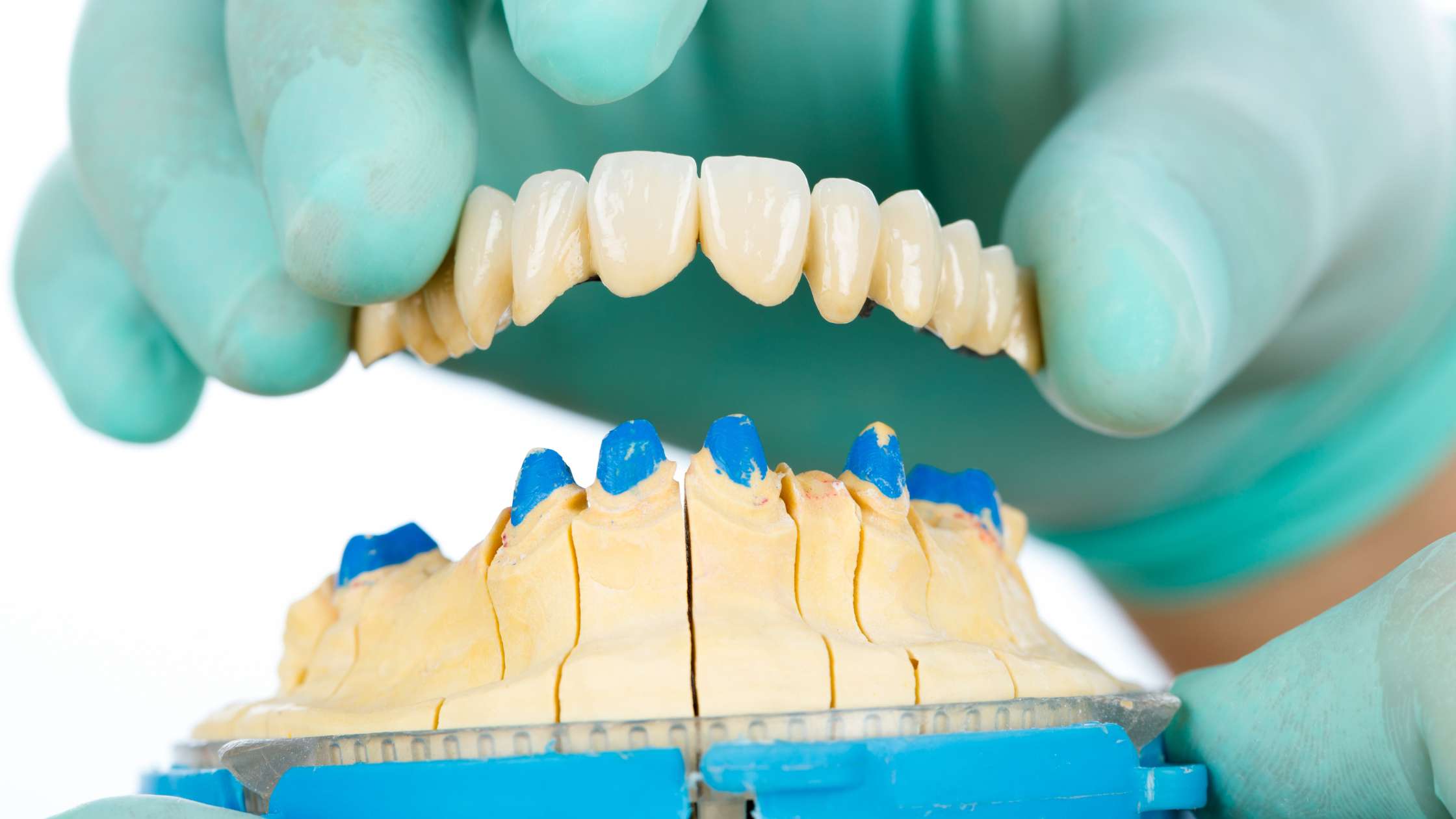
Fitting a bridge is less invasive than placing an implant because it does not require surgery. Instead, the bridge is attached to the neighbouring teeth, which act as supports, and the gap between them is filled with an artificial tooth.
2. Quicker procedure:
Fitting a bridge usually takes a few weeks, which is considerably quicker than implant treatment. Once the neighbouring teeth have been prepared and impressions taken, the bridge is made and fitted over a few visits to the dentist.
3. Lower cost:
Bridges are usually less expensive than implants, which makes them a more affordable option for many patients. Although bridges do not last as long as implants, their lower price can be the deciding factor.
Disadvantages:
1. Impact on neighbouring teeth:
To fit a bridge, the healthy neighbouring teeth have to be filed down so that they can support it. This can weaken those teeth and increase the risk of tooth decay or other problems in the future.
2. Shorter lifespan:
Bridges usually last between 5 and 15 years, after which they need to be replaced. This means that, in the long run, bridges can end up costing more because they may need replacing several times over a lifetime.
3. Jawbone preservation:
Unlike implants, bridges do not stimulate the jawbone, which means bone loss can continue where the tooth is missing. This can affect the structure of the face and the long-term health of your teeth and gums.
Which option is better for your smile?
Choosing between dental implants and bridges depends on a number of factors, including your oral health, your budget and your personal preferences. If you are looking for a permanent solution that most closely resembles a natural tooth, dental implants are the superior choice. They offer longevity, preserve the jawbone and do not affect neighbouring teeth. However, if you are looking for a quicker, less invasive and more affordable solution, a bridge may be the better option.
Before making a decision, we recommend a consultation with a dentist, who will assess your situation, discuss the pros and cons of each option and help you choose the solution that best suits your needs and expectations. Whichever option you choose, good oral hygiene and regular dental check-ups are key to keeping your teeth healthy and your smile lasting.