Dental crowns are one of the most common solutions in dentistry for restoring teeth that are damaged, weakened or unsatisfactory in appearance. A crown is a “cap” that covers the entire visible part of the tooth, giving it protection, strength and a pleasing, natural look. Fitting a dental crown involves several steps, and each one is essential for a long-lasting, functional result.
If your dentist has recommended a dental crown, you are probably wondering what the procedure involves and what to expect at each stage. In this article, we explain the process of fitting a dental crown in detail, from the initial consultation to the final result.

Preparing the tooth for a crown
1. Initial consultation and planning
The first step in getting a dental crown is a consultation with your dentist. During this visit, the dentist will assess the condition of your tooth and decide whether a crown is the best solution for your needs. This examination may include X-rays to check the condition of the tooth root and the surrounding bone.
If the tooth is badly damaged or has deep tooth decay, additional treatment, such as root canal treatment, may be needed before the tooth can be prepared for a crown.
2. Preparing the tooth
Once the treatment plan has been agreed, the dentist will begin preparing the tooth for the crown. This step involves reshaping (filing down) the tooth to create enough space for the crown. How much of the tooth needs to be reshaped depends on the type of crown being used. For example, porcelain-fused-to-metal crowns require less reduction than all-ceramic crowns.
If the tooth is too badly damaged, the dentist may need to build it up with composite materials or create a core that provides extra support for the crown.
3. Taking impressions
After preparing the tooth, the dentist will take impressions of your teeth. These impressions are used to make a custom crown that fits your tooth perfectly. Impressions can be taken traditionally, using a special impression material, or digitally, with a 3D scanner.
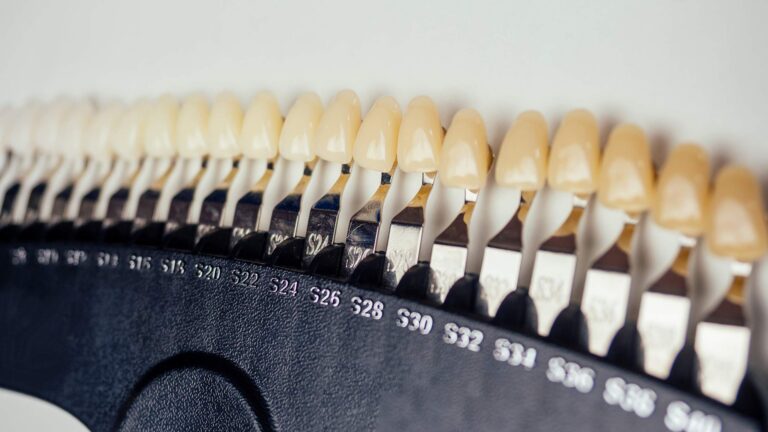
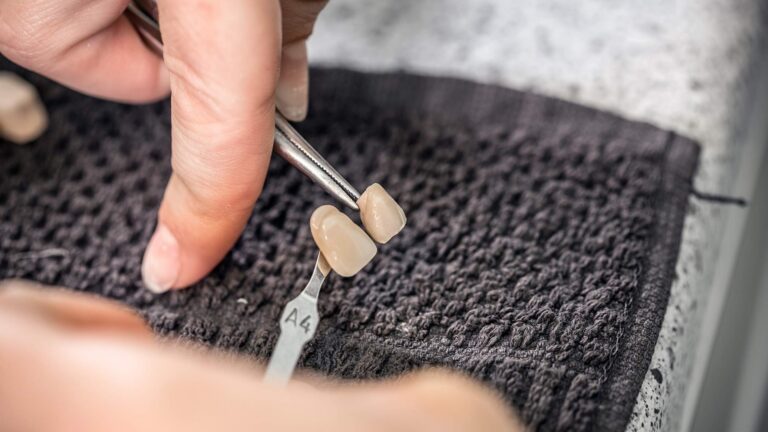
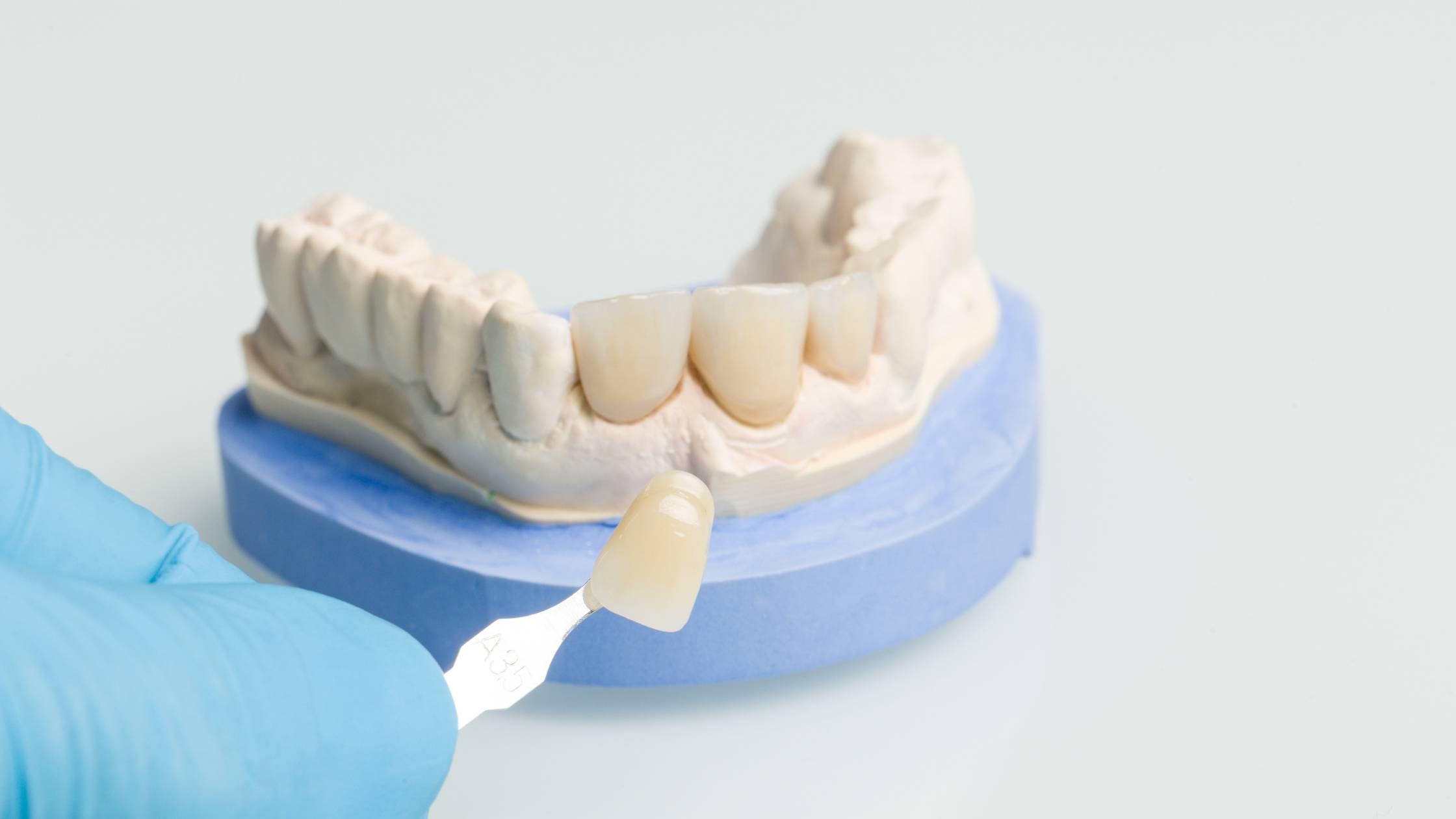
As well as taking impressions, the dentist will choose a shade for the crown that matches the colour of your natural teeth, so the final result looks harmonious.
Making and fitting the crown
1. Fitting a temporary crown
While your permanent crown is being made in the laboratory, the dentist will fit a temporary crown to protect the prepared tooth. A temporary crown is usually made of acrylic or composite materials and is not as strong as a permanent one, so we recommend chewing carefully and avoiding hard foods during this period.
2. Making the permanent crown
Making the permanent crown can take anywhere from a few days to two weeks, depending on the complexity of the case and the type of crown. The crown is made in a dental laboratory based on the impressions and information provided by the dentist. Modern laboratories use advanced technology, such as CAD/CAM systems, to produce precise and durable crowns.
3. Fitting the permanent crown
Once the permanent crown is ready, the final stage follows – fitting the crown. The dentist will remove the temporary crown and carefully place the permanent crown on the tooth. Before cementing it in place, the dentist will check the fit, colour and shape of the crown and make any necessary adjustments to ensure a perfect result.
When both you and your dentist are happy with the fit and appearance of the crown, it will be permanently cemented onto the tooth. The dentist will then check your bite and make further adjustments if needed, so that the crown feels comfortable and works properly.
What can you expect after your crown is fitted?
1. Getting used to your crown
After your crown is fitted, you may notice mild sensitivity or discomfort in the tooth, especially when chewing or having very hot or cold drinks. These symptoms usually disappear within a few days as your tooth and the surrounding tissues adjust to the new crown.
If you notice lasting pain or discomfort, or feel that the crown is not sitting properly, it is important to contact your dentist straight away so the problem can be resolved.
2. Looking after your crown
Dental crowns do not need special care, but it is important to maintain good oral hygiene to prevent tooth decay in the remaining part of the tooth or problems with your gums. Regular brushing, flossing and visits to the dentist are key to making your crown last.
Avoid biting on very hard objects, such as ice or nuts, to prevent damage to the crown. With proper care, dental crowns can last 10 to 15 years, and often even longer.
Conclusion
Fitting a dental crown is a complex but highly effective procedure that can restore both the function and the appearance of your smile. Understanding the steps involved will help you prepare for treatment and achieve the best possible result. If you have a damaged or weakened tooth that needs extra protection, a dental crown may be the right solution for you. With proper care and regular dental check-ups, you will ensure that your new crown stays healthy and lasts for many years.