When you lose one or more teeth, one of the first questions that comes up is: what is the best solution? Today there are several options – dental implants, bridges and dentures – but the differences between them are not always clearly explained to patients.
In this article we offer a detailed comparison to help you understand what each option means for your health, function and long-term satisfaction.
Why is it important to choose the right solution?
Replacing teeth is not just a cosmetic decision. The treatment you choose affects:
- the stability of your bite
- the health of the surrounding teeth
- bone preservation
- long-term function
That is why it is important to understand the differences before you make a decision.
Dental implants – the most natural solution
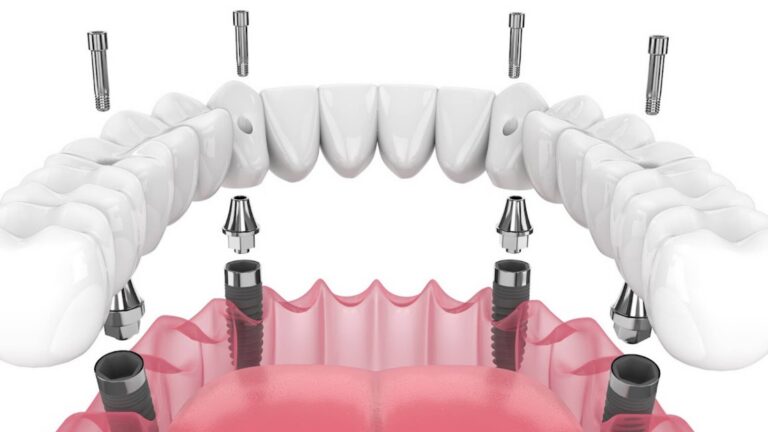
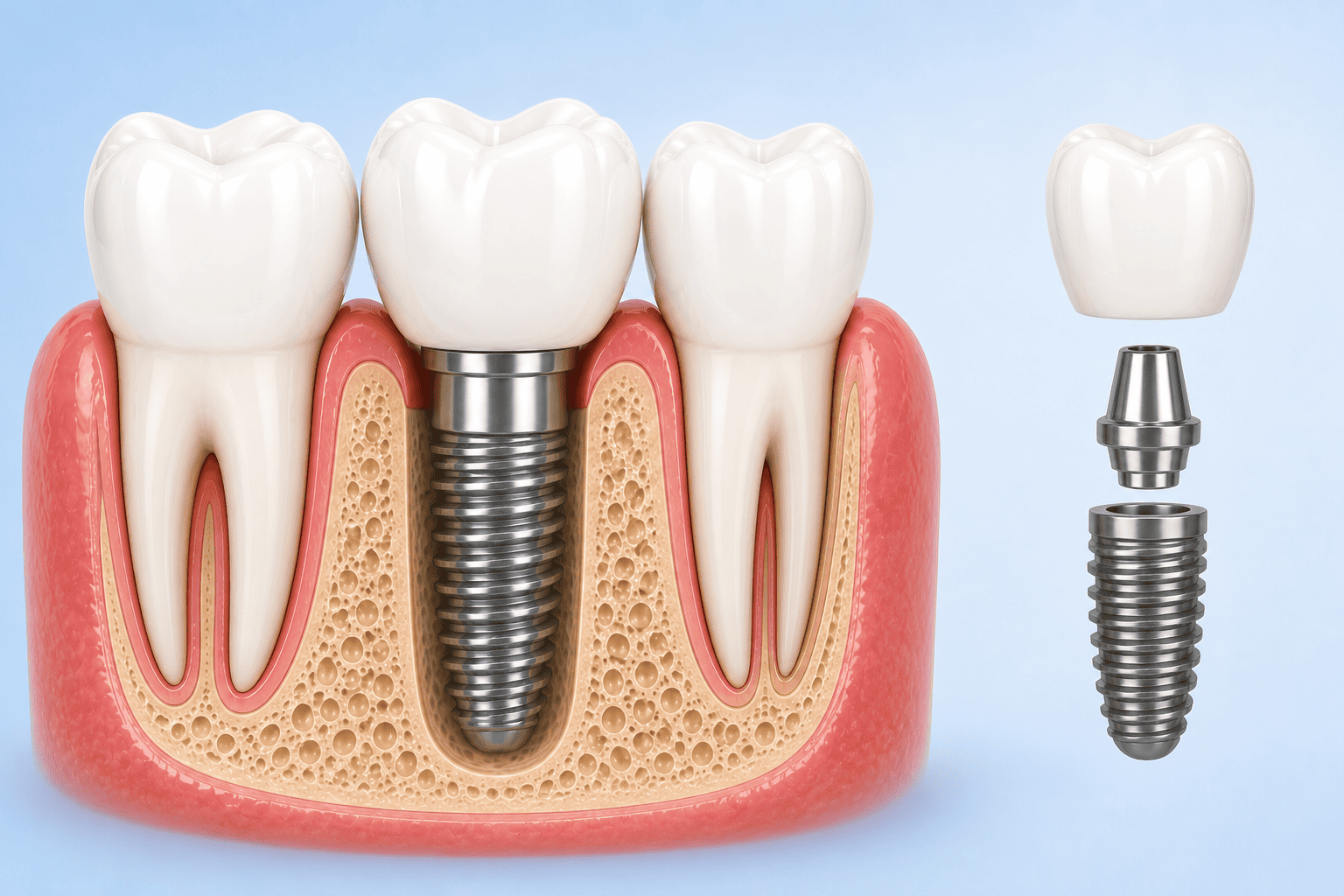
A dental implant is a titanium screw that is placed in the bone and takes over the function of the tooth root. A crown is then fitted on top, which looks and works like a natural tooth.
Advantages of implants:
- they preserve the bone and prevent it from deteriorating
- they do not damage neighbouring teeth
- a long-lasting solution
- a natural look and feel
Disadvantages:
- a higher initial investment
- a surgical procedure is required
Implants are the most common choice for patients who want a stable, long-term solution.
Dental bridge – a compromise solution
A bridge is used to replace one or more teeth by resting on the neighbouring teeth, which have to be filed down.
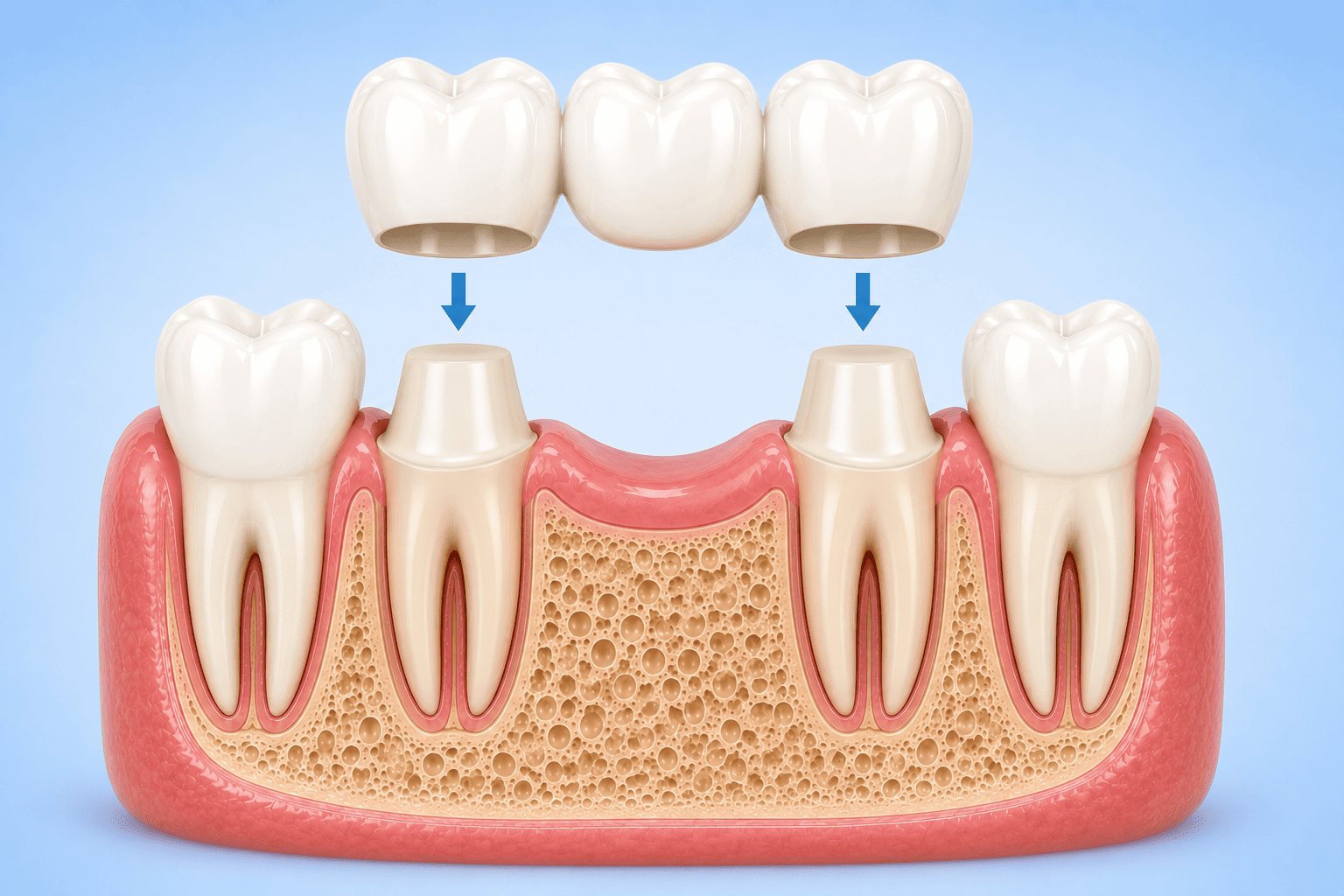
Advantages of a bridge:
- quicker to make than an implant
- a lower initial cost
Disadvantages:
- healthy teeth have to be filed down
- it does not prevent bone loss
- a shorter lifespan than implants
A bridge can be a good solution in certain situations, but it has its limitations in the long term.
Dentures – a solution for more extensive tooth loss
Dentures are removable solutions used when a larger number of teeth are missing.
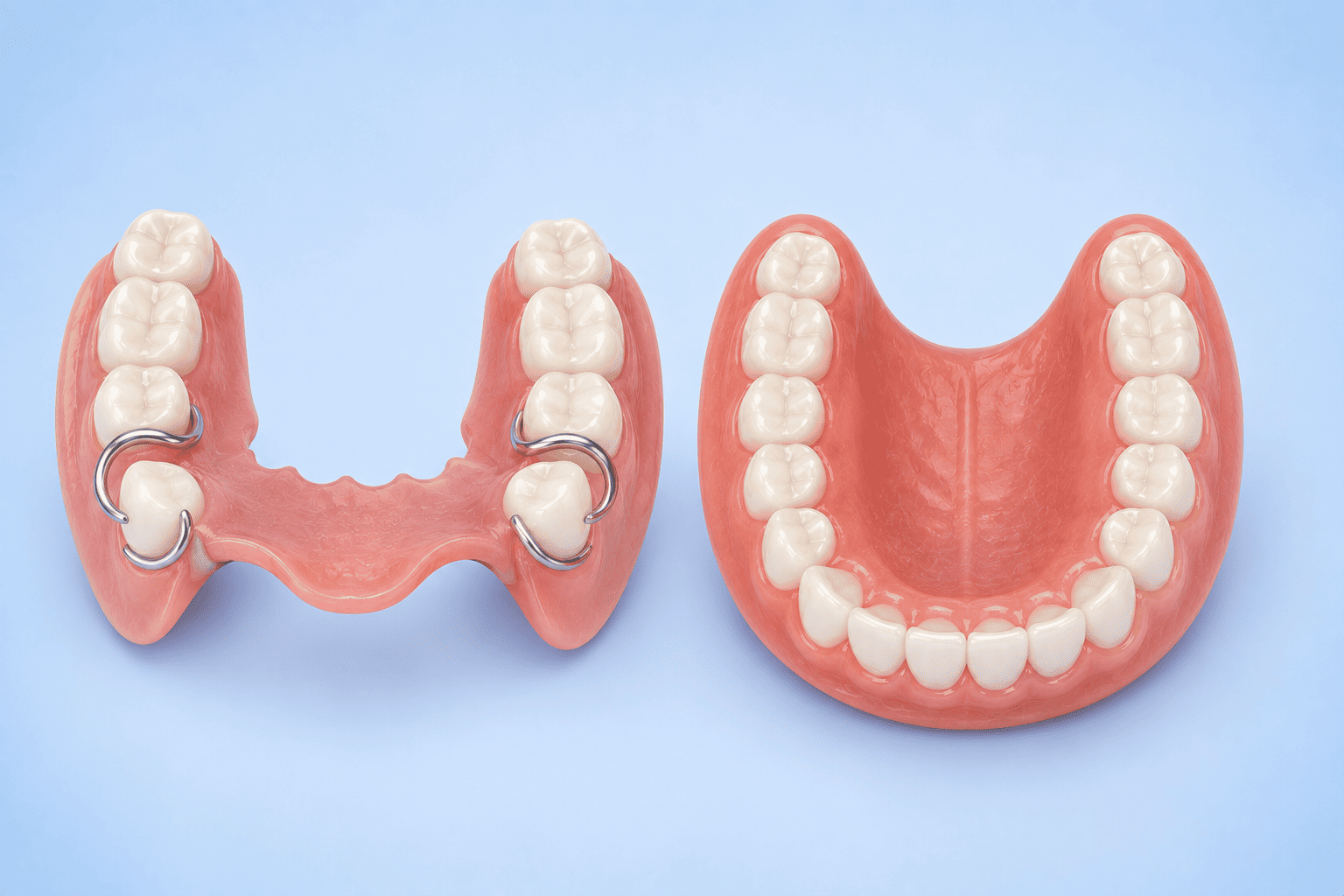
Advantages of dentures:
- the most affordable option
- a quick solution for replacing several teeth
Disadvantages:
- less stability
- discomfort when wearing them
- a period of adjustment is needed
- they do not prevent bone loss
For many patients, dentures are a temporary or interim solution.
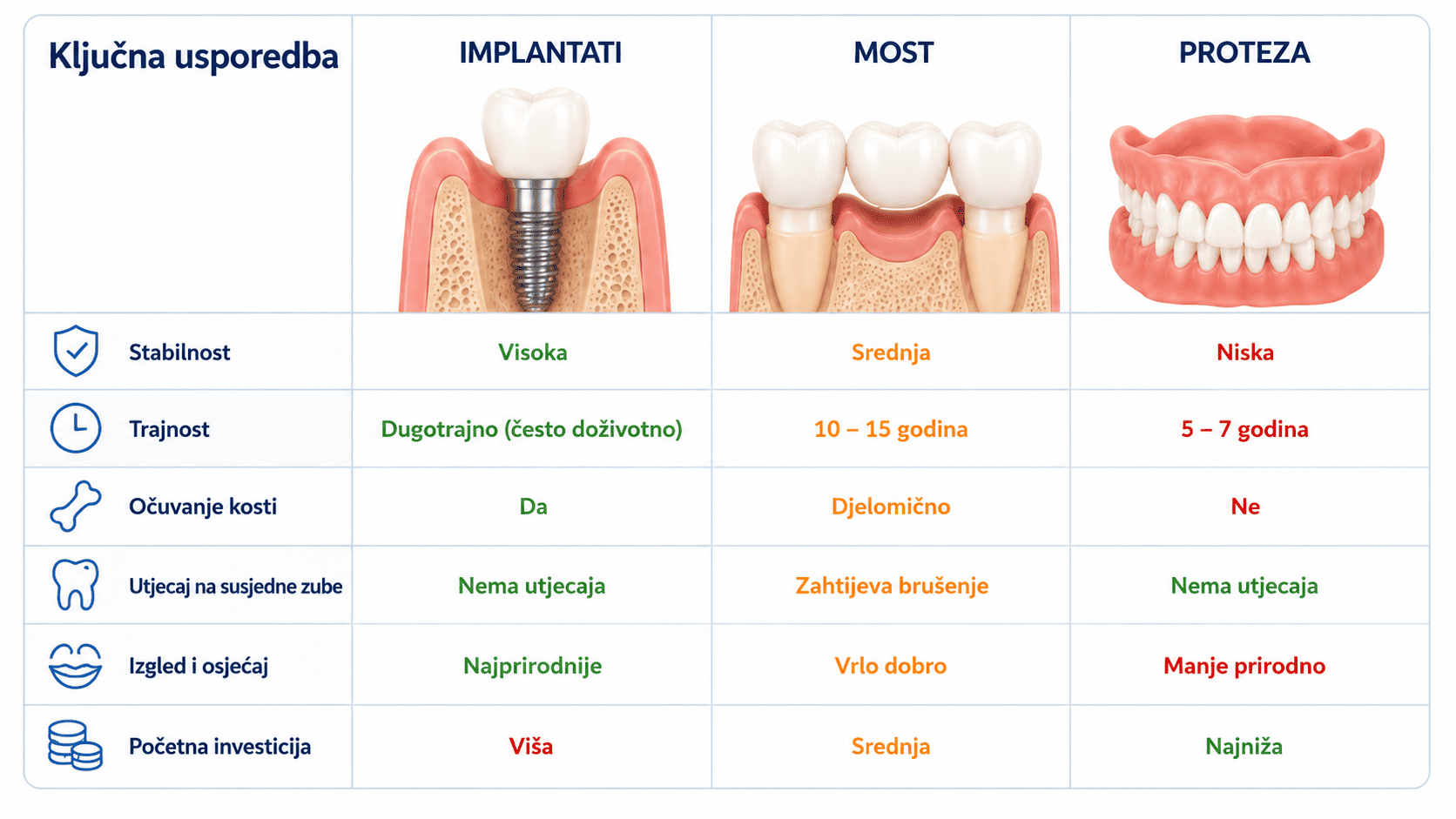
The key comparison
Looking at the long term:
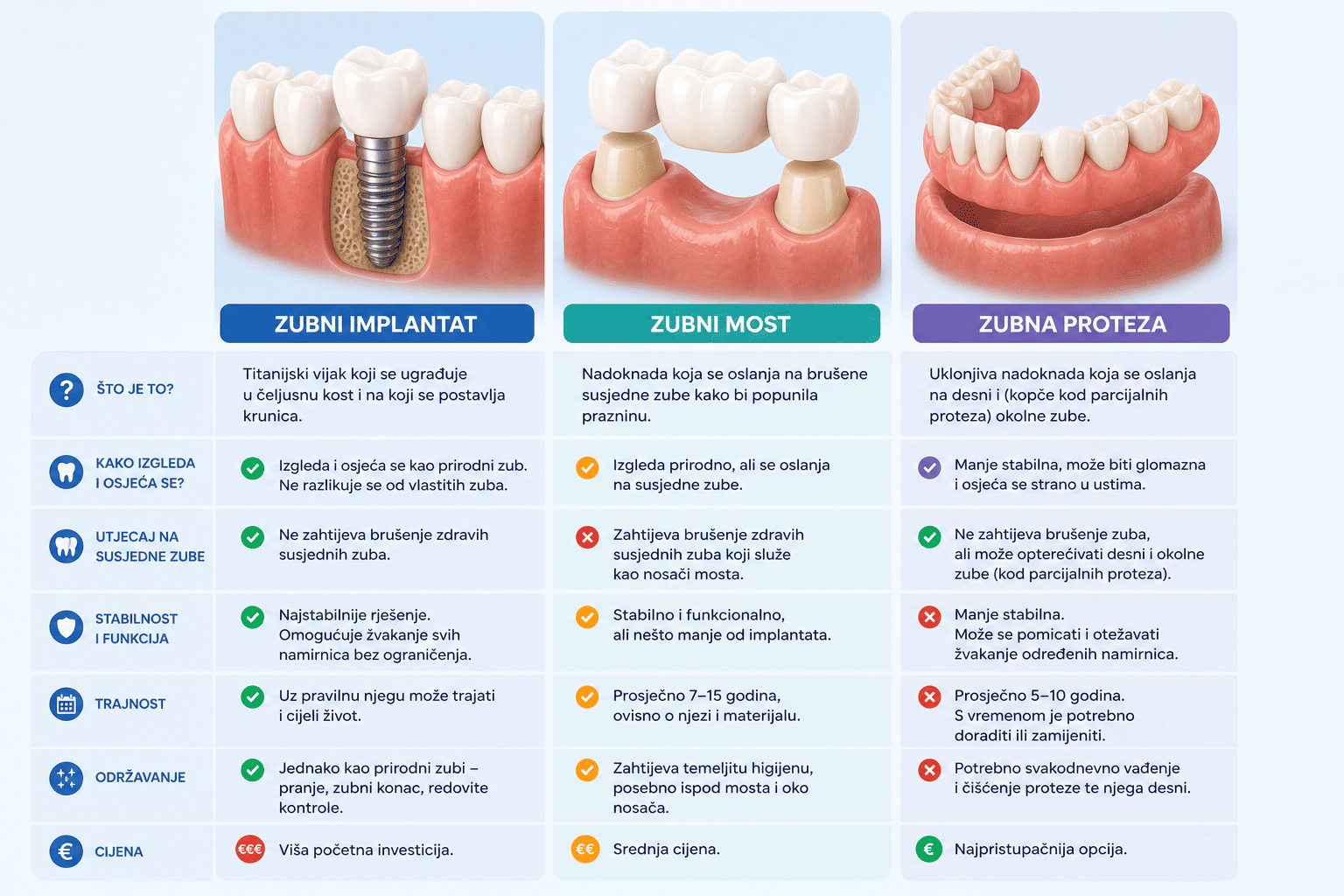
- Implants → stability, durability, bone preservation
- Bridge → a middle-ground solution, a compromise
- Denture → a short-term, functional solution
What is best for you?
There is no single solution that suits everyone. The choice depends on:
- the number of missing teeth
- the condition of your bone
- your general oral health
- your expectations and budget
That is exactly why an individual examination is a key step.
Cost vs. long-term value
One of the questions patients ask most often is: which solution offers the best value?
At first glance, dentures and bridges have a lower initial cost than implants. However, it is important to look at the bigger picture.
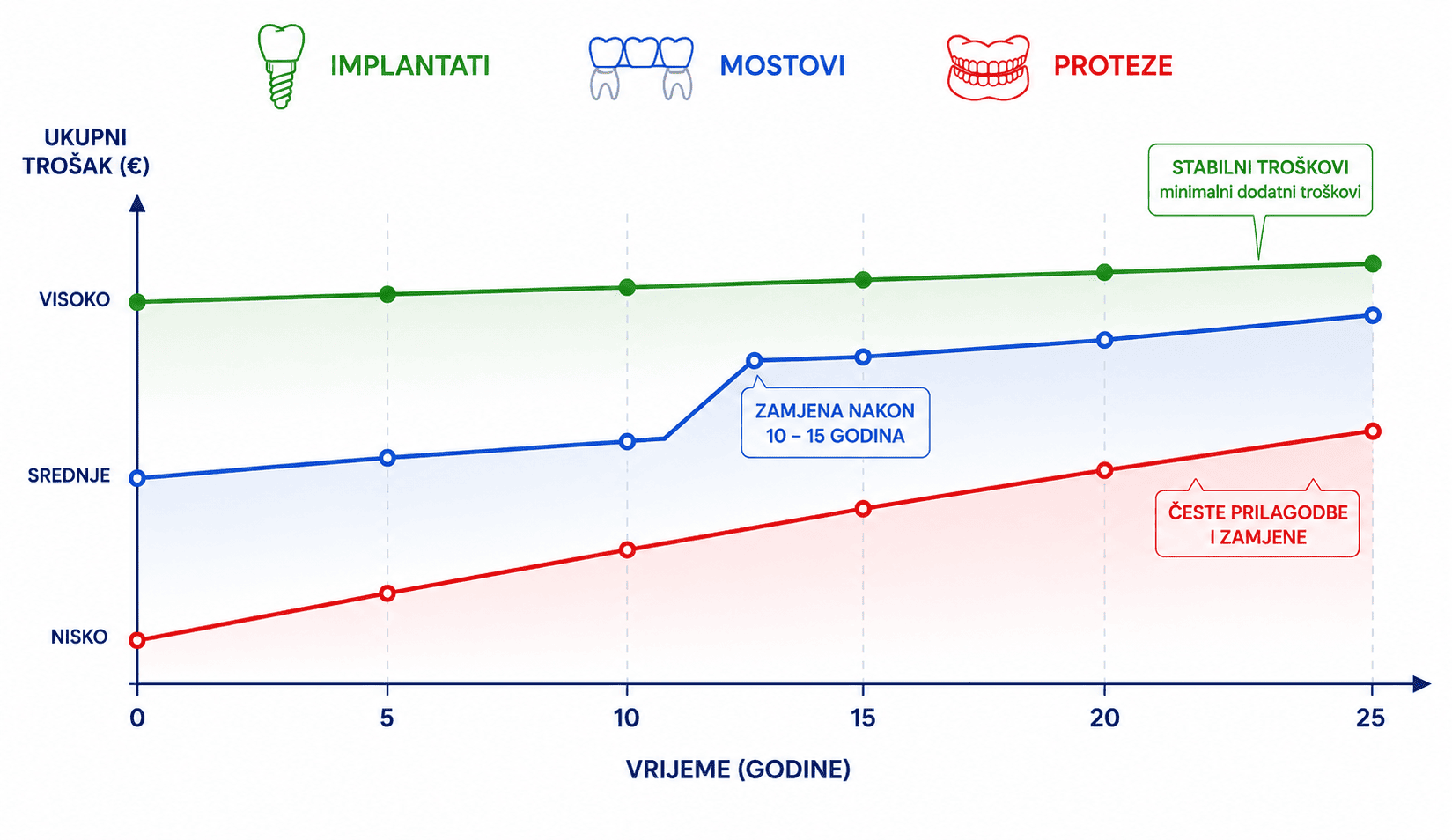
Implants:
- a higher initial investment
- a long-lasting solution, often for life with proper care
- minimal additional costs over time
Bridges:
- a lower initial cost
- a limited lifespan, often 10–15 years
- possible additional costs due to damage to neighbouring teeth
Dentures:
- the lowest initial cost
- frequent adjustments and replacements
- in the long run they can become more expensive because of maintenance and discomfort
Viewed over the long term, implants are often the best-value option, as they offer stability, function and durability without the need for frequent interventions.
FAQs – the questions patients ask most
Is having an implant placed painful?
The procedure is carried out under local anaesthetic, which means the procedure itself is painless. Some mild discomfort is possible afterwards, but it is easily controlled with painkillers.
How long does the whole implant process take?
The process depends on the condition of the bone and your individual situation, but on average it takes a few months – including the time needed for the implant to integrate with the bone.
Can every patient have implants?
In most cases, yes, but there needs to be enough bone. If there is not enough, additional procedures such as bone grafting are possible.
How long do implants last?
With good oral hygiene and regular check-ups, implants can last for decades, often for a lifetime.
Are implants better than a bridge?
In most cases, yes, because they do not require the neighbouring teeth to be filed down and they help to preserve the bone. However, the final decision depends on the patient’s individual condition.
Conclusion
Although there are several options for replacing teeth, dental implants are now considered the most advanced and longest-lasting solution. They not only restore function and aesthetics but also preserve the structure of the jaw.
If you want a permanent solution that mimics a natural tooth, implants are an option well worth considering.
Dentico – expertise and an individual approach
At Dentico Dental Clinic, every patient receives a personalised treatment plan. Our goal is not simply to replace a tooth, but to find the solution that will be best for your health and quality of life in the long term.
Book a check-up and find out which option is best for you.