Losing a single tooth affects not only how your smile looks, but can also cause practical problems, such as difficulty chewing or speaking. Today, the two most common options for replacing a missing tooth are dental implants and dental bridges. Both methods have their advantages and disadvantages, and the best choice depends on your specific needs, the health of your teeth and your budget.
Dental implants and bridges differ in how they are fitted, how long they last, how much they cost and how they are cared for. In this article, we look at each option in detail to help you make an informed decision and choose the solution that best suits your needs.
What are dental implants?
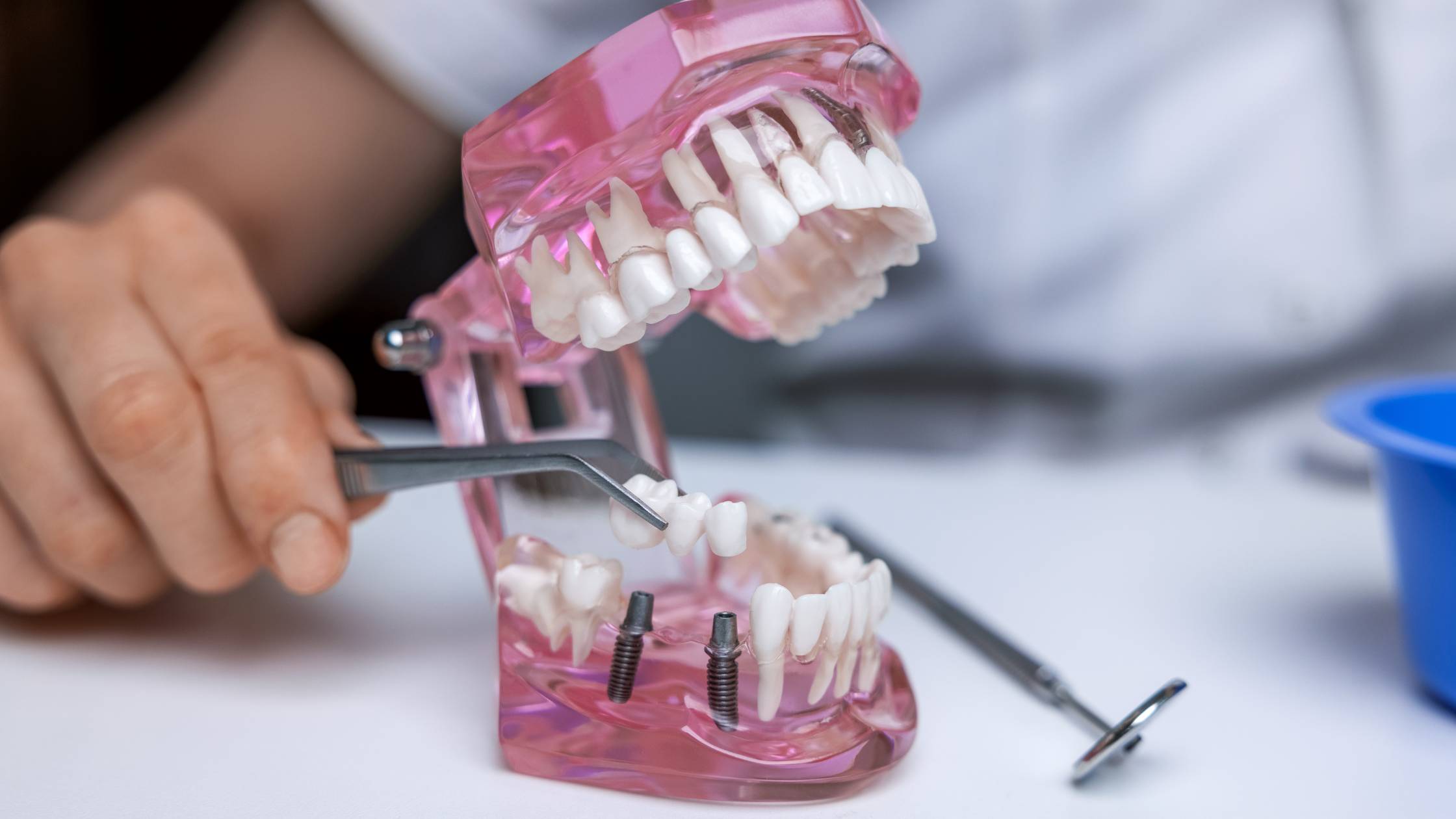
Dental implants are a modern, permanent replacement for missing teeth. An implant consists of a titanium screw that is surgically placed in the jawbone, where it acts as a replacement for the tooth root. Once the implant has fused with the bone (a process that takes several months), a crown is attached to it that looks and works just like a natural tooth.
Advantages of implants:
1. Longevity and stability: Dental implants are a permanent solution that, with proper care, can last a lifetime. Because the implant fuses with the jawbone, it provides a stable base for the crown, allowing you to chew and speak normally.
2. Preserving bone health: Implants stimulate the jawbone and prevent it from shrinking, which is a common problem after tooth loss. Preserving the bone is essential for long-term oral health and for the structure of your face.
3. Natural look and feel: Implants look and function like natural teeth, giving an excellent cosmetic result and a natural feel. There is no need for any special changes to your diet or speech.
4. No impact on neighbouring teeth: Unlike bridges, implants do not require the healthy teeth next to the gap to be filed down, so their structure and lifespan are preserved.
Disadvantages of implants:
1. Higher cost: Implants are a more expensive option than bridges, especially when you take into account the surgical procedures and materials involved.
2. Lengthy process: The implant process can take several months, because the implant needs time to fuse with the bone before the crown can be fitted.
3. Potential complications: As with any surgical procedure, there is a risk of complications, such as infection or implant failure, although these risks are relatively low.
What are dental bridges?
Dental bridges are a traditional method of replacing one or more missing teeth. A bridge consists of one or more artificial teeth (pontics) attached to the neighbouring natural teeth or to implants. The neighbouring teeth that support the bridge have to be prepared so that the bridge can be attached to them.
Advantages of dental bridges:
1. Quicker procedure: Fitting a bridge is a faster process than getting implants. After the teeth are prepared and impressions are taken, the bridge can be fitted within a few weeks.
2. Lower cost: Dental bridges are usually less expensive than implants, which makes them an attractive option for patients on a limited budget.
3. Good cosmetic result: Bridges can be made from high-quality materials that blend in with your natural teeth, giving a pleasing cosmetic result.
4. Versatility: Bridges can be used to replace one or more teeth, making them a flexible solution for a range of dental needs.
Disadvantages of dental bridges:
1. Neighbouring teeth have to be filed down: To secure the bridge, the healthy teeth next to the gap need to be filed down, which can weaken their structure and increase the risk of future problems.
2. Shorter lifespan: Bridges usually last between 5 and 15 years, after which they need to be replaced. In the long run, this can mean higher costs compared with implants.
3. They do not prevent bone loss: Because a bridge does not stimulate the jawbone, bone loss at the site of the missing tooth can continue, which may lead to changes in facial structure and problems with the gums.
Which solution is better for you?
Choosing between dental implants and bridges depends on several factors, including your oral health, your budget and your personal preferences.
• If you are looking for a permanent solution that will preserve the health of your jawbone and give you a natural look and function, dental implants are the better choice.
• If you want a quicker, less invasive solution and have a limited budget, dental bridges can be a suitable option.
Before making a final decision, we recommend a consultation with a dentist, who will assess your condition, take your needs and goals into account and help you choose the best option for your smile.
Conclusion
Replacing a missing tooth is an important step in protecting your oral health and your confidence. Both dental implants and bridges have their advantages and disadvantages, and the choice between them depends on your individual needs and preferences. A timely consultation with a specialist will help you make the best decision and ensure a healthy, beautiful smile for years to come.