Teeth whitening is one of the most popular cosmetic procedures in dentistry. We all want a radiant smile that reflects health and confidence, yet many people struggle with tooth discolouration caused by coffee, tea, red wine, smoking or simply ageing. Today there is a wide range of teeth whitening methods, from professional treatments at the dental clinic to products you can use at home. But how do you know which method is right for you, and how long can you expect the results to last?
Choosing the right whitening method depends on your individual needs, the degree of discolouration and your expectations regarding how long the results should last. In this article we take a detailed look at the different teeth whitening methods, their pros and cons, and how long you can expect the results to last.
Teeth whitening methods
1. Professional in-clinic whitening
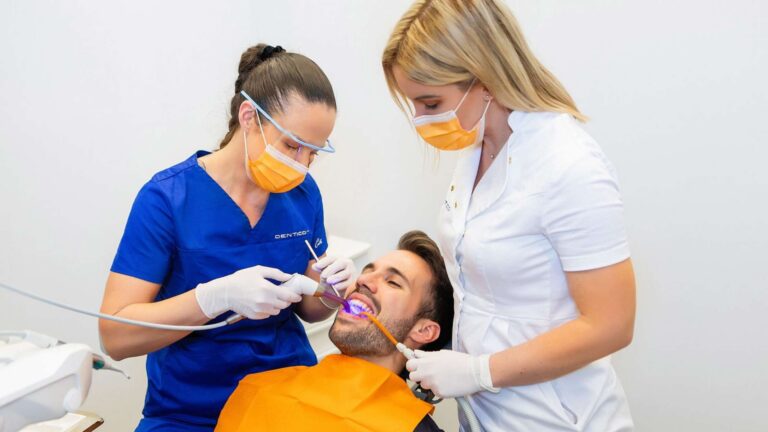
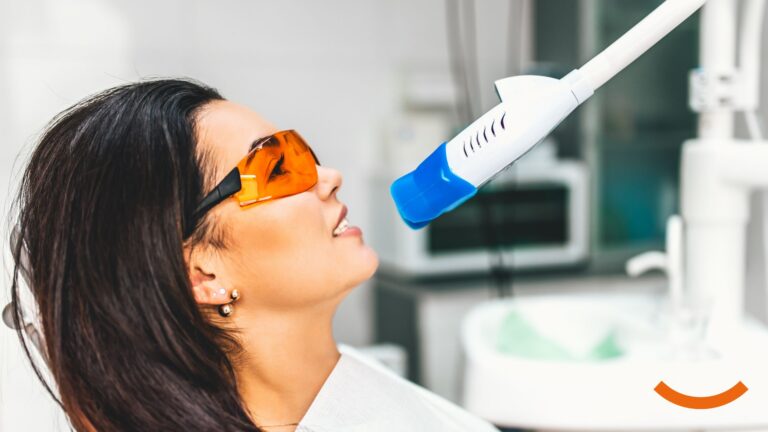
Professional teeth whitening at the dental clinic is the fastest and most effective way to achieve noticeably lighter teeth. During this treatment, the dentist applies a highly concentrated gel containing hydrogen peroxide or carbamide peroxide to the teeth. The process is often combined with an LED light or laser, which activates the gel and speeds up the whitening process.
• Advantages: Professional whitening delivers the fastest results – often after just one treatment your teeth can be several shades lighter. The procedure is also safe, as it is carried out by a professional who can tailor the treatment to your needs.
• Disadvantages: The main drawback of professional whitening is its cost, which can be fairly high. In addition, some patients may experience temporary sensitivity in their teeth or gums after treatment.
• How long the results last: The results of professional whitening usually last between one and three years, depending on your diet and oral hygiene. Regular check-ups and maintenance can help the results last longer.
2. At-home whitening kits
At-home whitening kits provided by your dentist are another popular option. These kits usually include custom-made trays that you fill with whitening gel and wear for a set period, typically a few hours a day or overnight, over two weeks.
• Advantages: At-home kits allow you to achieve professional results in the comfort of your own home. They are also often cheaper than professional in-clinic whitening, although the results are comparable.
• Disadvantages: It may take longer to achieve the desired results than with professional in-clinic whitening. Incorrect use can also lead to gum irritation or uneven whitening.
• How long the results last: The results of at-home kits usually last around a year, but regular use can help keep your teeth white.
3. Whitening strips and gels
Whitening strips and gels that can be bought in pharmacies or chemists are a popular way to whiten teeth at home. Strips are applied directly to the teeth, while gels are applied with a brush. These products contain lower concentrations of active ingredients than those used by dentists.
• Advantages: Strips and gels are affordable and easy to use. They can be used at home without the need to visit a dentist, which makes them practical for people with busy schedules.
• Disadvantages: The results may be less dramatic and shorter-lived compared with professional treatments. There is also a greater risk of uneven whitening and tooth sensitivity.
• How long the results last: The results usually last from six months to a year, depending on your habits and how you care for your teeth.
4. Whitening toothpastes
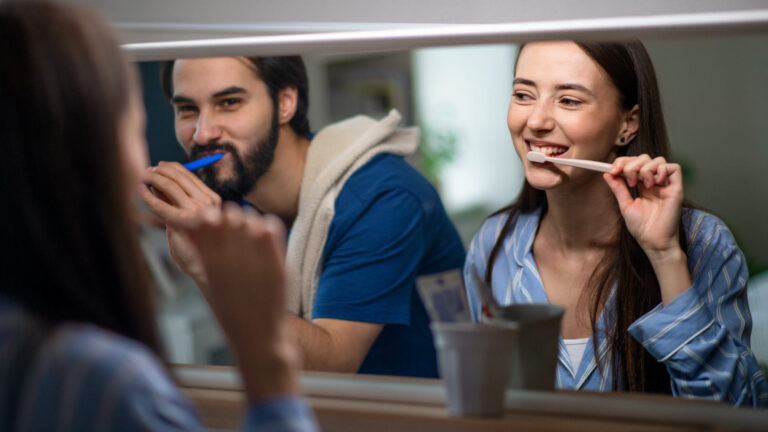
Whitening toothpastes are the most affordable way to keep your teeth white or achieve mild whitening. These toothpastes contain abrasive particles that remove surface stains from the teeth, as well as ingredients that help prevent new stains from forming.
• Advantages: Whitening toothpaste is easy to use and can be part of your regular oral hygiene routine. It is also affordable and available in almost every shop.
• Disadvantages: Toothpastes only provide surface whitening and cannot change the natural colour of your teeth. Long-term use can cause enamel abrasion if used too often.
• How long the results last: Toothpastes can help maintain the whiteness of your teeth, but on their own they do not deliver long-term whitening results. Their effect lasts only as long as you keep using them regularly.
How long results last and how to maintain them
How long teeth whitening results last depends on the method you choose, but also on your diet, oral hygiene and lifestyle. Drinking dark-coloured beverages such as coffee, red wine or tea, or smoking, can make discolouration return more quickly. Brushing your teeth regularly, flossing and visiting your dentist can all help maintain your whitening results.
For longer-lasting results, consider using maintenance whitening kits recommended by your dentist, or occasionally using whitening strips or gels. It is also important to eat a healthy diet and avoid habits that can darken your teeth.
Conclusion
Teeth whitening can significantly improve your smile, but it is important to choose the method that best suits your needs and expectations. Professional in-clinic whitening offers the fastest and most dramatic results, while at-home treatments can be a more economical option with gradual but satisfying results. Whichever method you choose, regular oral hygiene and proper care are key to keeping your teeth white in the long term. Before deciding on any treatment, it is advisable to consult your dentist to make sure the chosen method is safe and suitable for your teeth.