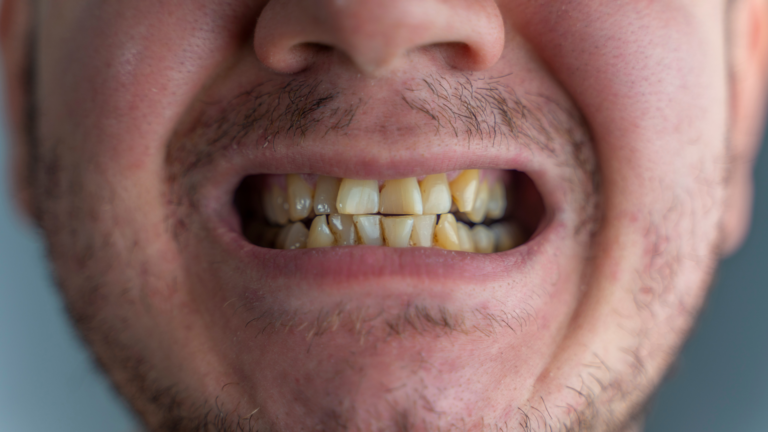
Many people see losing a tooth as a mainly cosmetic problem. If the gap doesn’t show when they smile, they often put off dealing with it, thinking “it isn’t urgent”. The reality, however, is quite different. Every lost tooth sets off a chain of changes in your mouth that can affect the health, function and appearance of your whole bite.
In this article, we explain in detail what actually happens when a missing tooth is not replaced, what the long-term consequences are and why it is important to act in good time.
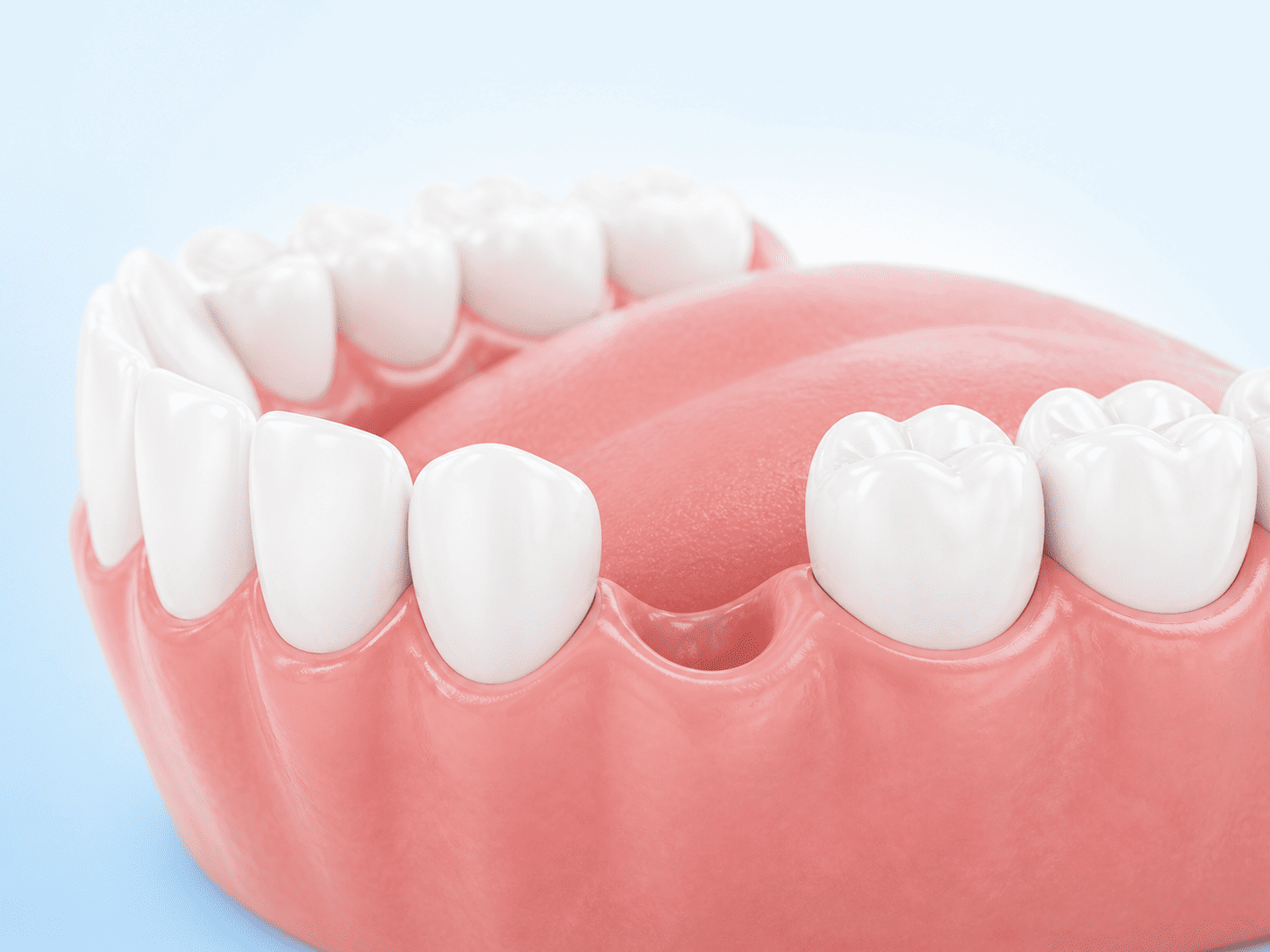
Why losing one tooth is not a “small problem”
Many patients assume that losing a single tooth cannot have much impact on their oral health, especially if it is a back tooth that nobody can see. But teeth work as a connected system – each tooth has its own role, and stability depends on the balance of the entire bite.
When one tooth is lost, the whole system starts to adapt, and these changes become more and more pronounced over time.
Neighbouring teeth start to shift
Teeth are not static – they constantly adapt to the space around them. When a tooth is missing, the neighbouring teeth begin to drift towards the gap, while the opposing tooth in the other jaw can “over-erupt” up or down because it no longer has anything to bite against.
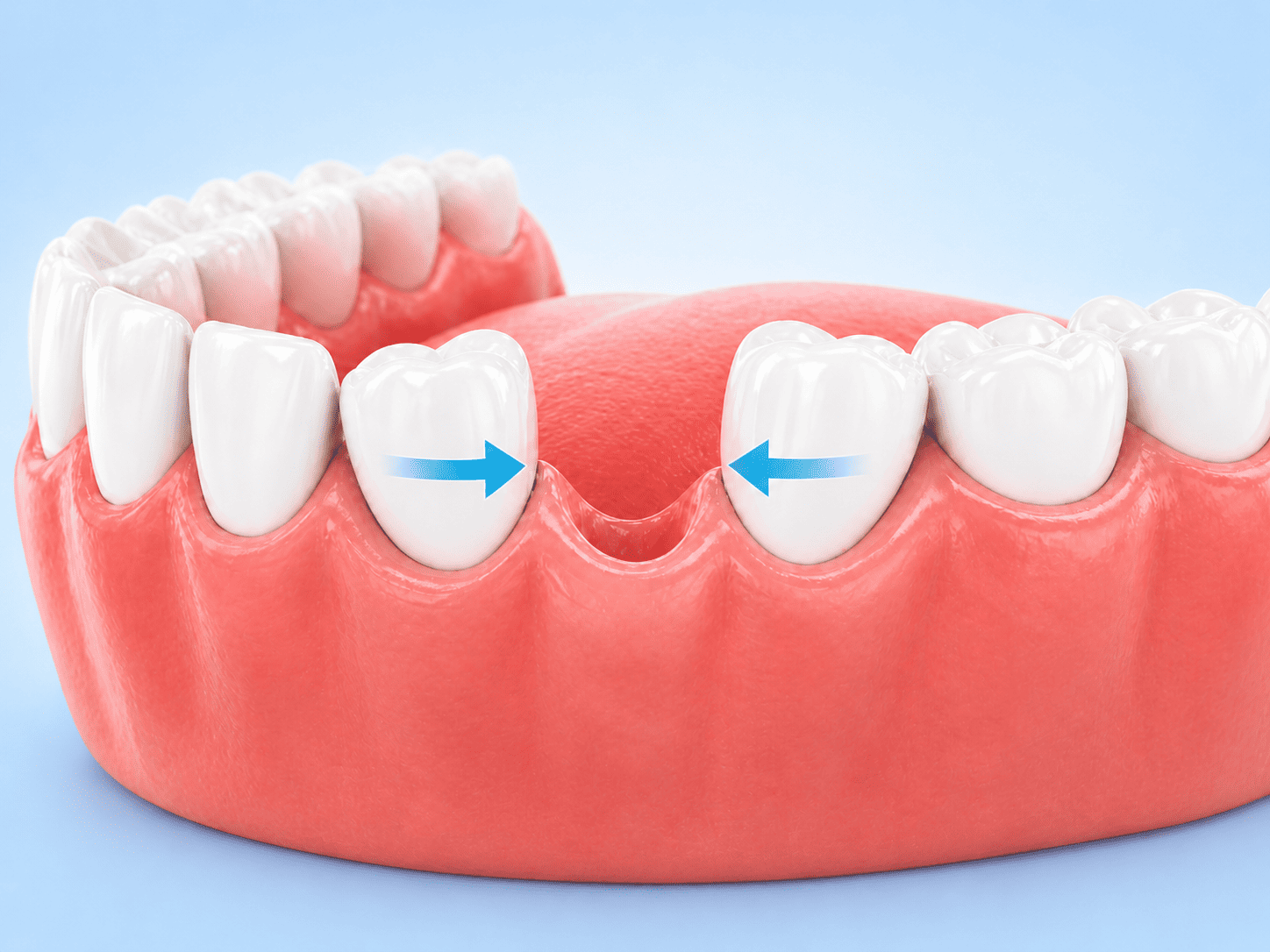
These changes can lead to:
- a disrupted bite
- misaligned teeth
- areas that are hard to reach when cleaning
- a higher risk of tooth decay and gum inflammation
Over time, what started as a minor issue can develop into a complex orthodontic and prosthetic problem.
Bone loss – a hidden but crucial consequence
One of the most important consequences of tooth loss happens beneath the surface – in the bone. Every time you chew, the tooth root stimulates the jawbone. When the tooth is gone, that stimulation stops and the bone gradually begins to resorb.
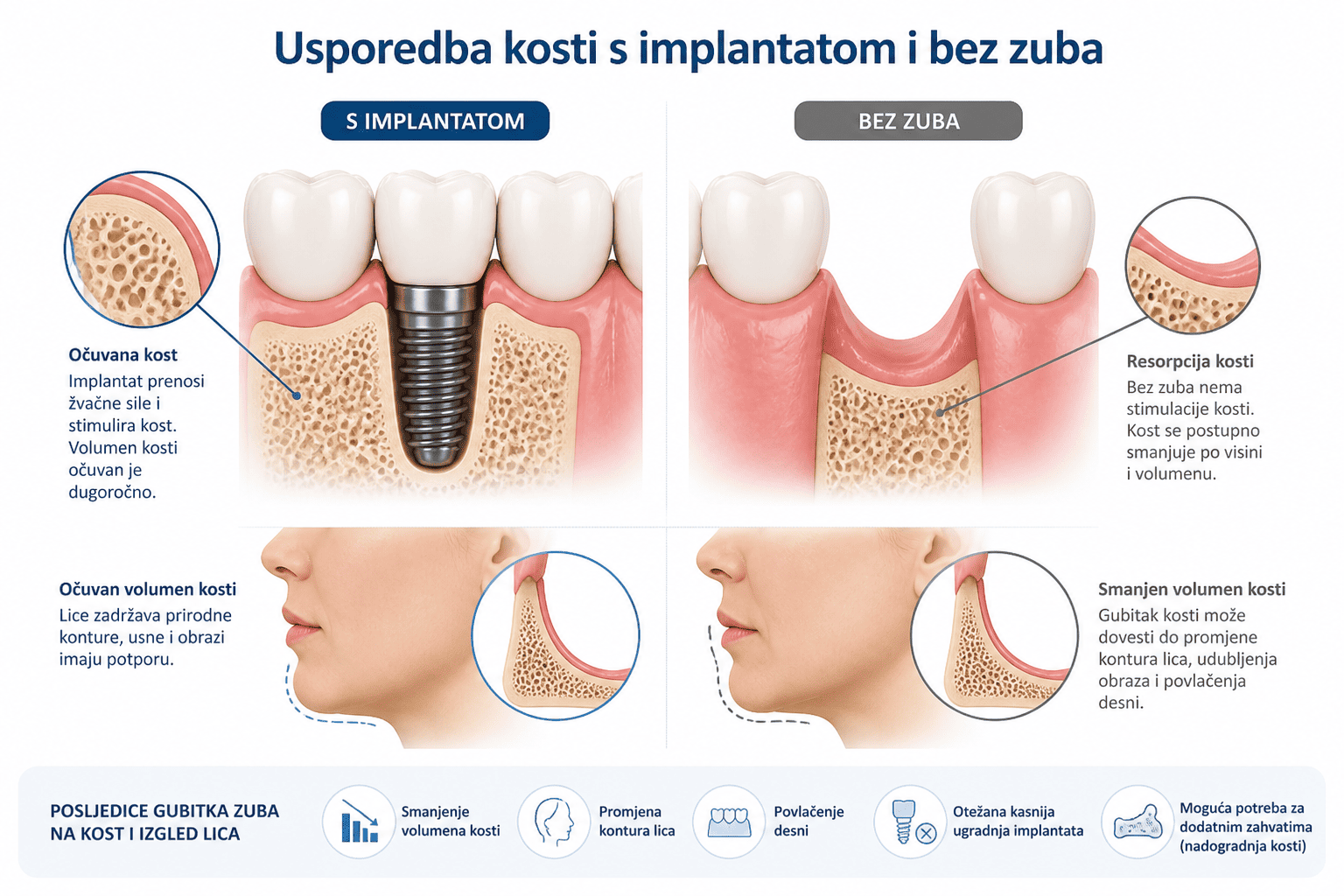
This process can lead to:
- reduced bone volume
- changes to the contours of the face
- receding gums
- more difficult implant placement later on
The longer you wait, the more likely it is that additional procedures, such as a bone graft, will be needed.
Problems with chewing and digestion
Every tooth plays its part in chewing. When one or more teeth are missing, the load is distributed unevenly and the remaining teeth are put under excessive strain.

This can cause:
- discomfort when chewing
- avoiding certain foods
- less effective breaking down of food
As a result, digestion can also suffer, because food is not properly prepared before it reaches the stomach.
Changes in appearance and self-confidence
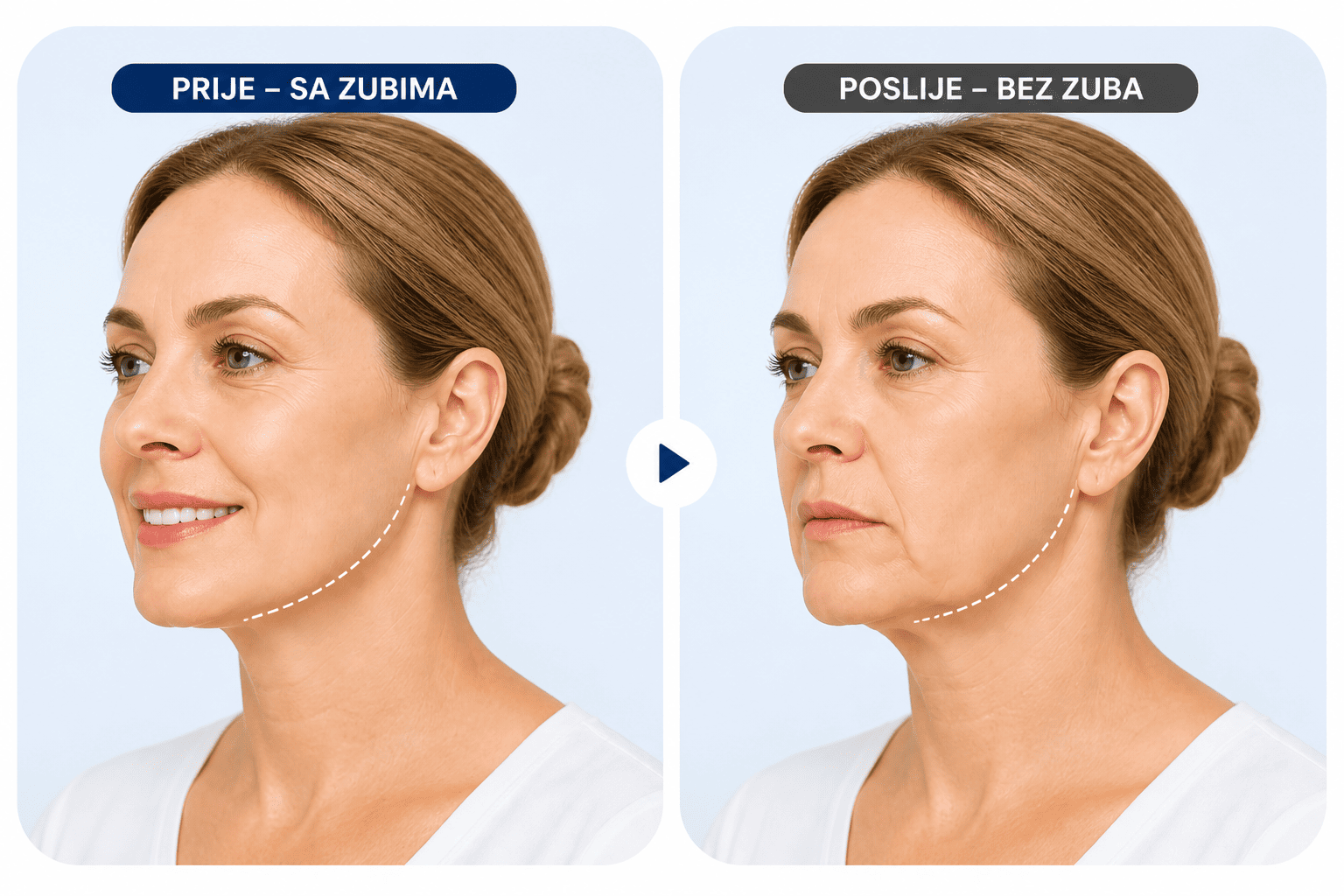
Even when the missing tooth is not visible, long-term changes in facial structure can become noticeable. Losing support in the jaw can cause the lower part of the face to gradually “collapse”.
Besides the physical changes, patients often report:
- feeling self-conscious when smiling
- discomfort when speaking
- avoiding social situations
More complex and costly treatment in the long run
Putting off treatment often leads to the need for more complex therapy. Instead of one simple procedure, a combination of several treatments may be required.
These include:
- orthodontic treatment
- bone grafting
- more complex prosthetic work
That is why acting promptly is not only the healthier choice, but also the more sensible one financially.
What are the options?
Today there are several ways to replace a missing tooth:
- dental implants
- bridges
- dentures
Each of these options has its own indications, but dental implants are considered the most advanced solution because they mimic a natural tooth – including its root.
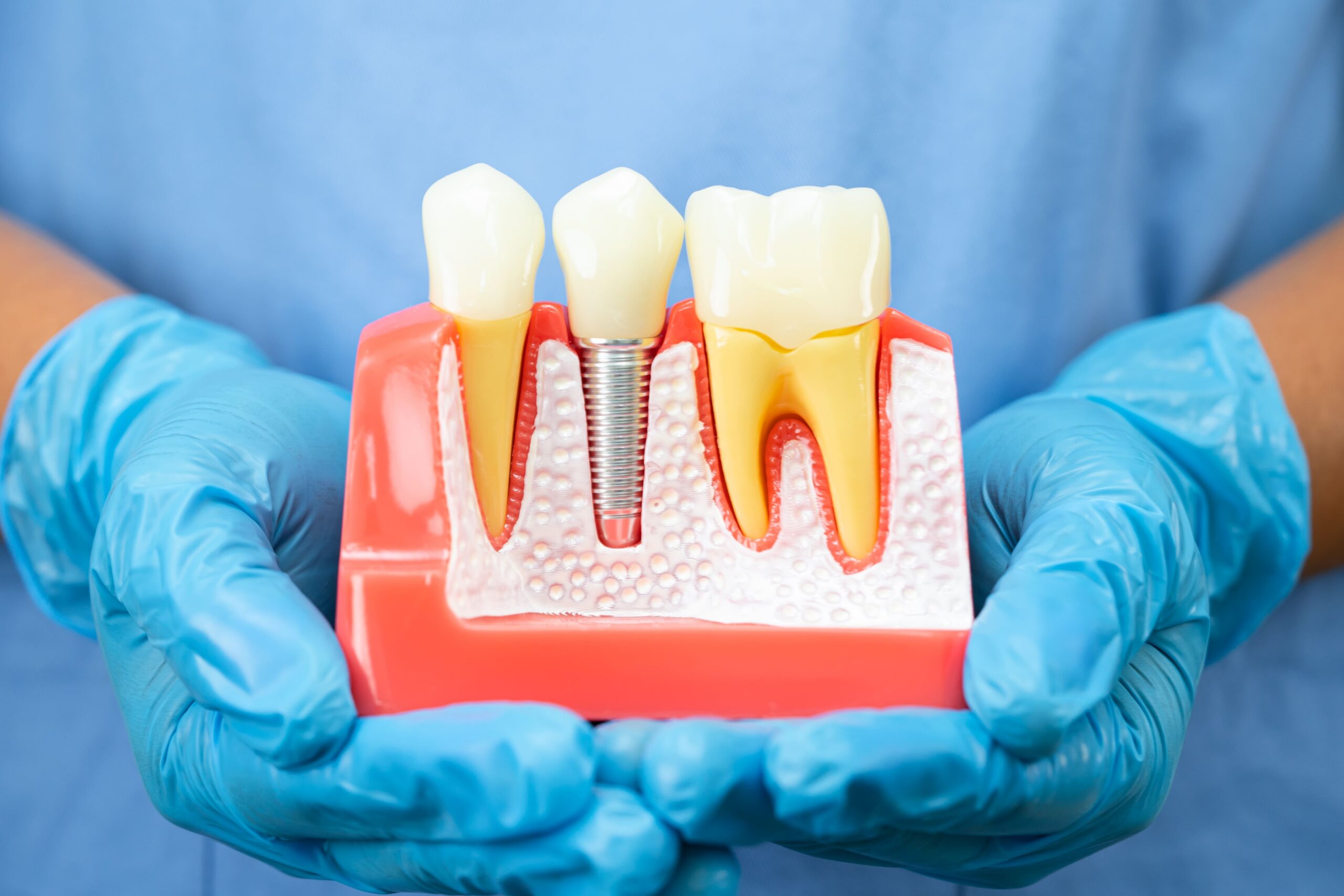
The benefits of implants include:
- preserving the bone
- stability and durability
- a natural look and function
- no reliance on neighbouring teeth
When is the right time to act?
The answer is simple – as soon as possible.
If you have lost a tooth, it is best to act early to prevent further complications. At an early stage, treatment is simpler, quicker and more successful in the long term.
Conclusion
Tooth loss is not just a cosmetic problem – it affects your whole mouth, from your bite to the structure of your jawbone. What seems like a small gap at first can, over time, become a serious functional and health problem.
If you are considering treatment, the first step is always an informed check-up and a conversation with a specialist.
Dentico – your first step towards a solution
At the Dentico clinic, we take an individual approach with every patient. Our aim is to explain your situation and options clearly and to recommend the solution that is best for you in the long term.
No pressure. No rush. Just an expert, transparent approach.
Book a check-up and find out which solution is best for your smile.