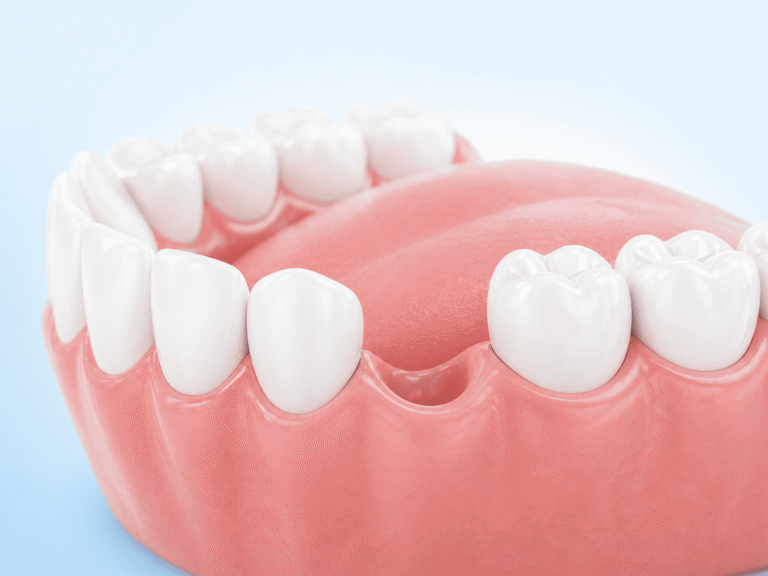
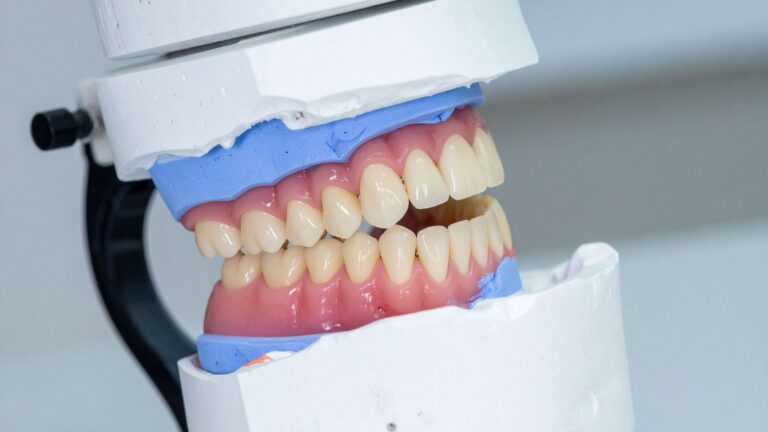
an effective solution for replacing missing teeth
Dental bridges are fixed prosthetic restorations used to replace one or more teeth in a row. The bridge is anchored to the remaining healthy teeth or to implants and fills the gap left by the missing teeth. Dental bridges are a stable, long-lasting solution that restores the function of your mouth and gives a natural-looking result.
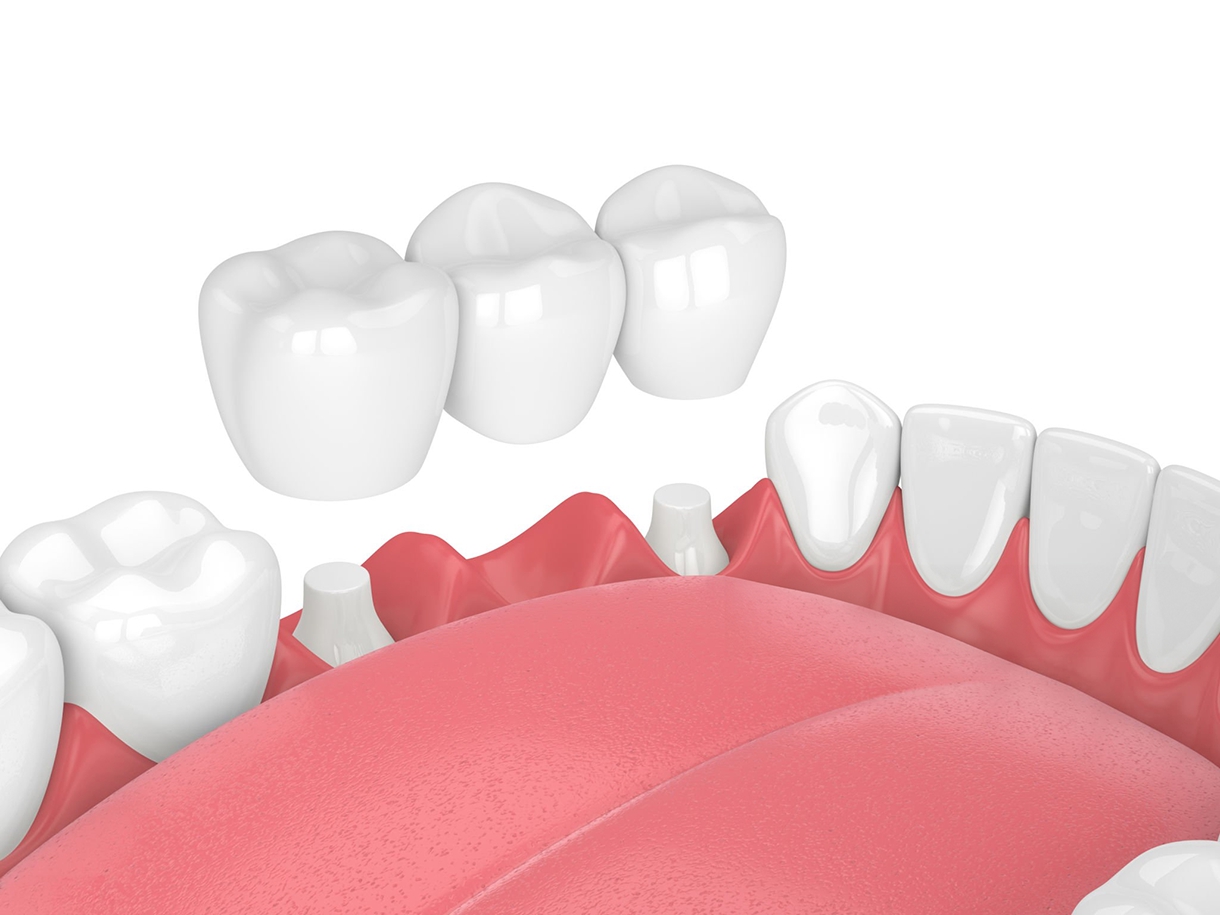
how does a dental bridge work?
A dental bridge is made up of one or more dental crowns that fill the gap. The crowns at each end of the bridge are called “abutments” or “anchors” and are fixed to healthy teeth or implants that act as support. Between these abutments sit the “pontics” – artificial teeth that replace the missing ones. In this way, the bridge firmly links the remaining teeth and replaces the teeth that are missing.
types of dental bridges:
- Traditional bridge, the most common type, anchored to natural teeth on both sides of the gap. These teeth are usually reshaped (filed down) so they can hold the crowns that keep the bridge in place;
- Implant-supported bridge, if several teeth are missing or there are not enough healthy natural teeth for support, implants can be used as abutments. This option offers a stable, permanent solution without the need to file down healthy teeth;
- Cantilever bridge, used when the bridge can only be anchored on one side of the gap. This method is used less often, as it is not suitable for back teeth because of the chewing load;
- Maryland bridge (resin-bonded bridge), this bridge uses metal or ceramic frameworks bonded to the back of the neighbouring teeth instead of requiring them to be filed down. This option is less invasive, but it is not always strong enough to withstand heavier chewing forces.
benefits of dental bridges:
- Restored function, a dental bridge allows patients to chew and speak normally and helps preserve the natural bite;
- Natural appearance, bridges are made to match your natural teeth, giving you a natural and attractive smile;
- Prevents teeth from shifting, replacing missing teeth with a bridge stops the remaining teeth from drifting into the gap, maintaining a correct bite and tooth alignment;
- Durability, dental bridges are a stable, long-lasting solution that, with proper care, can last for many years.
drawbacks of dental bridges:
- Reshaping of neighbouring teeth, with traditional bridges, the healthy neighbouring teeth have to be filed down to serve as abutments, which can weaken them;
- Oral hygiene, bridges require thorough oral hygiene, including the use of special bridge floss, to prevent infection or tooth decay underneath the bridge.