dental implants

from € 520

a permanent, natural-looking solution for missing teeth

Dental implants are a high-quality, permanent solution for replacing one or more teeth. They are small titanium screws placed in the jawbone, where they take the place of the lost tooth’s root. A crown, bridge or denture is then fitted onto the implant, depending on the patient’s needs. Implants are designed to look and function just like natural teeth.
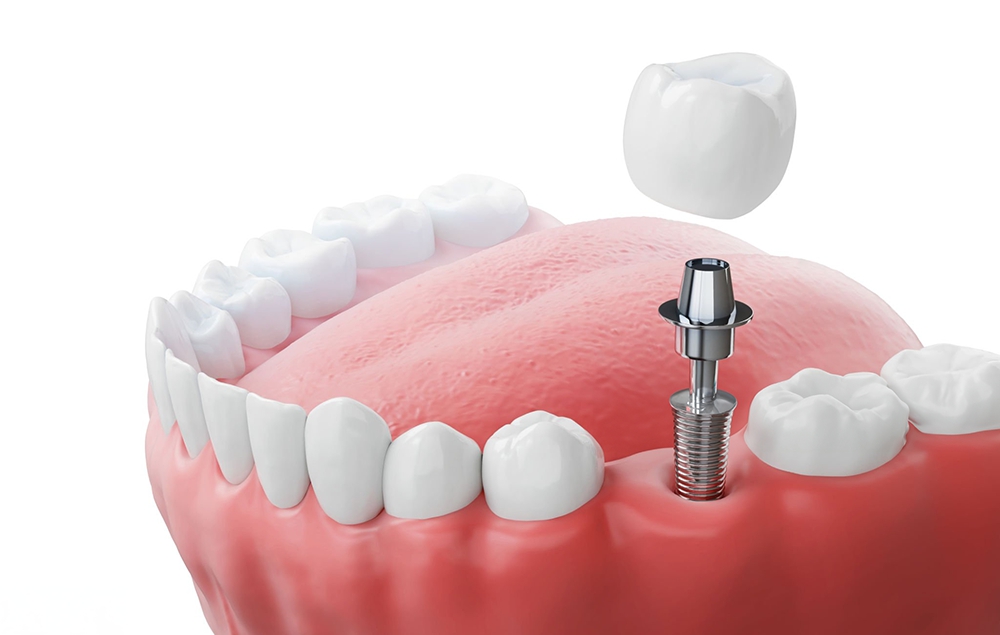
illustration of a dental implant and crown in the jaw

how do dental implants work?

The implant is surgically placed in the jawbone, where over time it fuses with the bone in a process called osseointegration (the bonding of the dental implant with the surrounding bone tissue of the jaw). Thanks to this process, the implant becomes a firm, stable foundation for the prosthetic restoration. Once the implant has fused with the bone (which usually takes a few months), the crown, bridge or denture is fitted, completing the treatment.

benefits of dental implants:

  • Natural look and feel. Implants look, feel and function like natural teeth, helping patients regain their confidence and full function in everyday life;
  • Durability and strength. With proper care, implants can last a lifetime;
  • Bone preservation. Implants stimulate the jawbone, preventing bone loss (resorption) and preserving the structure of the face;
  • No damage to neighbouring teeth. Unlike bridges, implants do not require the adjacent teeth to be filed down, so your healthy teeth stay intact.

who is a candidate for dental implants?

Almost any adult who has lost one or more teeth may be a candidate for implants, but it is important that the patient has enough healthy jawbone to support the implant. If there is insufficient bone, additional procedures such as bone grafting can create the right conditions for implant placement.

types of implant-supported restorations:

  • A single tooth: one implant with a crown is used to replace an individual tooth;
  • Several teeth: implants can be used to anchor a bridge, replacing several teeth without the need to file down neighbouring teeth;
  • Full-arch restoration (All‑on‑4/All‑on‑6): if all the teeth are missing, the All‑on‑4 or All‑on‑6 method can be used, replacing all the teeth in one jaw with four or six implants.


dental implant placement is a precise, carefully planned process that provides a permanent replacement for lost teeth using titanium screws (implants) placed in the jawbone. dental implants are one of the safest and longest-lasting ways to restore both the function and the appearance of your smile.

the implant placement procedure

Health assessment: The dentist first assesses the patient’s general health, checks the condition of the gums and jawbone, and discusses the patient’s wishes and needs.

X-rays and CT scan: Before deciding on the treatment, the dentist usually takes X-rays or a 3D CT scan to assess the jawbone and plan precisely where the implant will be placed. These images help the dentist determine the thickness, width and height of the bone and identify any obstacles or infections that could affect the success of the implant.

Treatment plan: Based on the images and diagnosis, the dentist draws up an implant treatment plan, deciding on the number of implants and their positions.

Anaesthesia and preparation: Before the procedure begins, the patient is given a local anaesthetic so that the treatment is completely painless. Patients with significant anxiety can be sedated if they wish.

Placing the implant: The implant surgeon makes a small incision in the gum to expose the jawbone, then uses precision instruments to prepare a site in the bone for the implant. The implant, usually made of titanium, is placed in the bone and over time fuses with it through a process called osseointegration (the bonding of the dental implant with the surrounding bone tissue of the jaw).

Closing the gum: Once the implant is in place, the dentist closes the gum with stitches.

Osseointegration: After the implant is placed, it takes a few months (usually 3–6) for it to integrate with the bone. During this time the bone “bonds” with the implant, creating a firm, stable foundation for the permanent tooth.

Monitoring and follow-up: The dentist monitors the healing process and checks that the implant has integrated properly with the bone. In the meantime, the patient can wear a temporary bridge or denture to maintain function.

Abutment: Once the implant has fully integrated, the dentist fits the abutment (usually made of titanium or ceramic), which connects the implant to the permanent crown or bridge.

Second incision: To fit the abutment, the dentist may make a small incision in the gum under local anaesthetic to expose the implant. The abutment is attached to the implant, creating a stable base for the permanent tooth.

Making the crown: Using an impression and/or a digital scan of the gums and implant, the dentist sends the impression and/or data to the laboratory, where a custom crown is made. The crown is matched in colour and shape to the patient’s natural teeth for a natural-looking result.

Fitting the crown: Once the crown is ready, the dentist places it on the abutment and secures it with cement or screws, depending on the situation.

Regular check-ups: After the implant and crown have been placed, the dentist carries out regular check-ups to monitor the implant and the health of the gums.

Maintaining oral hygiene: Dental implants need regular, thorough oral hygiene to last as long as possible. Patients should brush regularly, use dental floss and attend professional cleaning appointments with their dentist.

Longevity: With proper care, dental implants can last a lifetime.

dental implants are a modern, permanent and highly functional solution for anyone who wants a stable, natural-looking smile. if you are considering implants, we recommend that you book a consultation with a dentist at Dentico to find out whether you are a suitable candidate and which treatment plan would suit you best.

Read more on our

Dental blog

request a quote or book your free first visit